Fort Bowie National Historic Site
Adobe ruins at Apache Pass, reached on foot along a 3-mile trail through history
- Admission
- Free. No entrance pass required
- Federal passes are not sold on site (NPS, 2026)
- Hours
- Grounds, trails, ruins and restrooms open sunrise to sunset every day. Visitor center hour...
- Where
- Willcox, Tombstone & Bisbee
- Directions
- Directions
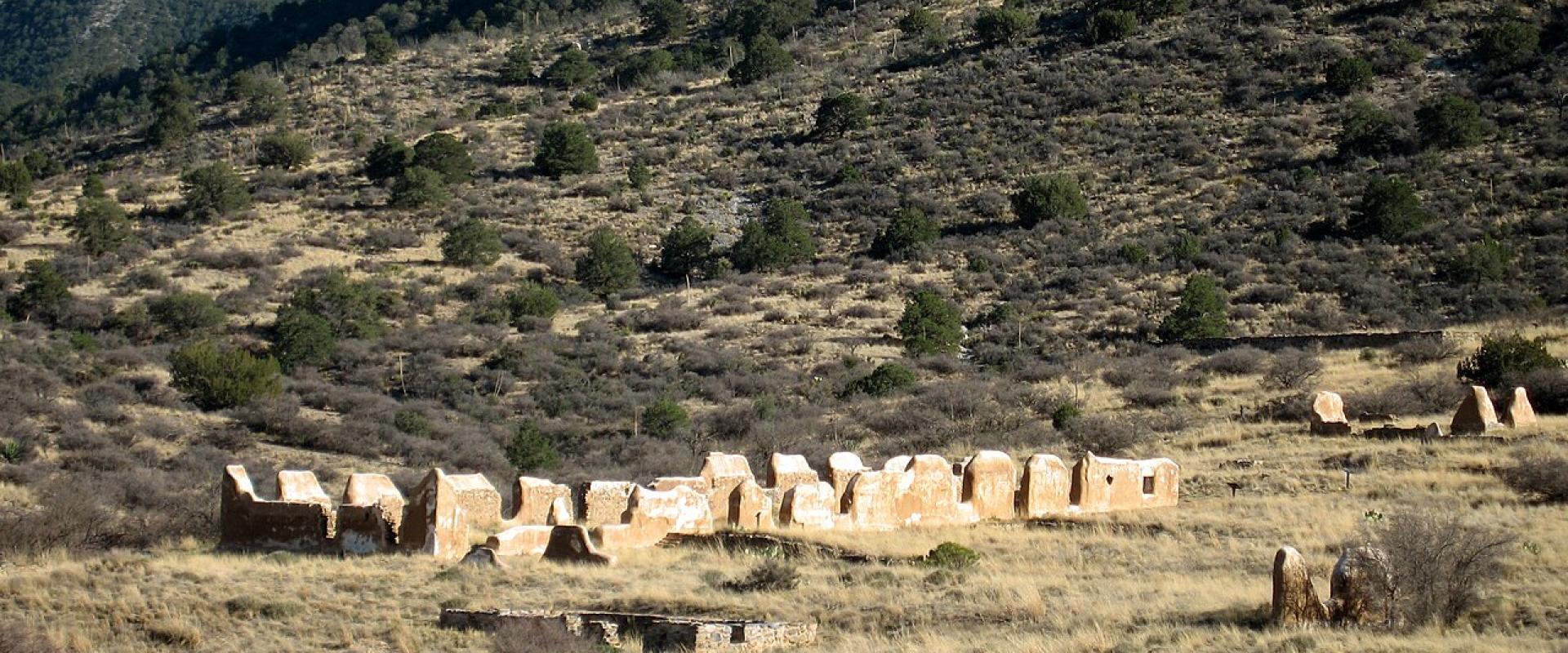
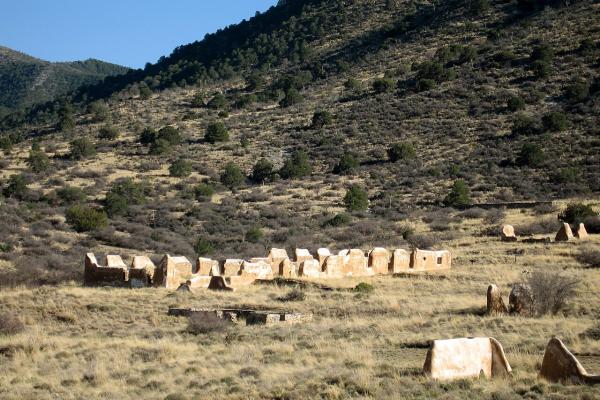
For more than two decades Fort Bowie, at Apache Pass, was the center of the U.S. Army's campaigns against the Chiricahua Apache. The reason it was here is still flowing: Apache Spring, the most dependable water source in the pass. Today the National Park Service protects the adobe walls and foundations of the fort, and the only way to reach them, for most visitors, is to walk.
The trail starts at a parking area on Apache Pass Road and runs about 1.5 miles to the visitor center and the ruins of the second fort, 3 miles round trip with just under 200 feet of elevation gain. Interpretive signs along the way tell the story in order. You pass the remains of a Butterfield Overland stage station, the site of the 1861 Bascom Affair, the post cemetery, a replica Chiricahua Apache camp, the site of the 1862 Battle of Apache Pass and Apache Spring itself.
The Bascom Affair, in February 1861, began when Lieutenant George Bascom accused Cochise of a raid on a rancher's stock and the kidnapping of a boy, which Cochise denied, and tried to hold him; Cochise cut his way out of the tent and escaped, and the war that followed did not end until 1872. In July 1862 Apache warriors ambushed a Union column at the pass in the Battle of Apache Pass, and California Volunteers built the first Fort Bowie that year, named for Colonel George Washington Bowie. In 1868 Regular Army troops built a larger second fort on a plateau southeast of the first. In September 1886 Naiche, son of Cochise, and Geronimo negotiated the final surrender of the Chiricahua Apaches. They were sent as prisoners of war to Fort Marion in Florida, then Mount Vernon Barracks in Alabama and finally Fort Sill in Oklahoma; they were released from prisoner-of-war status in 1913, and some moved to the Mescalero Apache Reservation in New Mexico. The Army abandoned the fort in October 1894, and the national historic site was established in 1964.
There is little shade in the pass, so carry water, a hat and sunscreen. Don't climb on the walls and mounds, and leave metal detectors and digging tools at home. The visitor center has artifact exhibits and a park store, and the restrooms are open sunrise to sunset every day. If you can't manage the hike, the park has an alternative access route on a narrow gravel road with limited parking; see the directions page.
Categories
More photos coming soon
Hours & Fees
- Open
- Grounds, trails, ruins and restrooms open sunrise to sunset every day. Visitor center hours vary; in 2026 NPS listed it as open Friday to Monday, 8:30 a.m. to 4 p.m., closed Tuesday to Thursday. Call 520-549-6751 to check (NPS, 2026).
- Admission
- Free. No entrance pass required; federal passes are not sold on site (NPS, 2026).
Hours and prices change, especially out of season. Check with the venue before you go.
Nearby Attractions
Other places to visit in Willcox
Questions people ask
Quick Facts
Free. No entrance pass required
Federal passes are not sold on site (NPS, 2026).
Best Time to Visit
October to April for hiking at Chiricahua and Fort Bowie (March is busiest); January for wintering sandhill cranes; summer is quieter but brings monsoon storms.