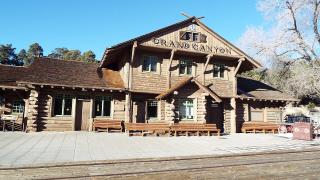
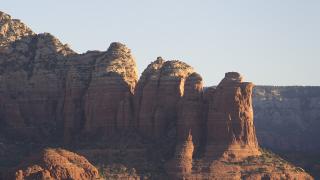
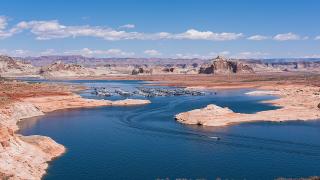
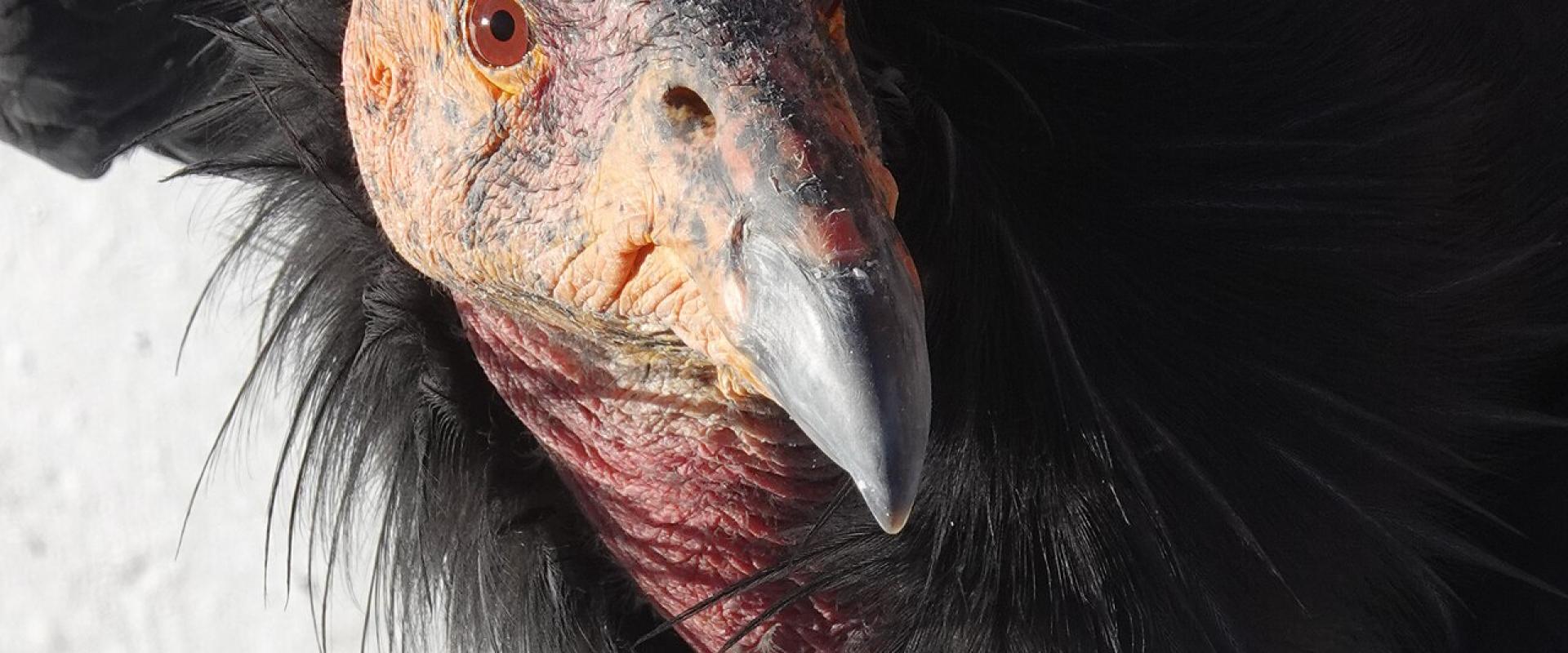
Arizona's best wildlife watching is in three places. Southeast Arizona's "sky island" mountains and the San Pedro River draw birders from around the world. California condors fly over the Vermilion Cliffs and the Grand Canyon. The wildlife refuges along the lower Colorado River hold some of the last streamside forest and marsh in the desert.
This guide covers where to go, what you might see and when, using the managing agencies' and conservation groups' own figures.
Southeast Arizona: sky islands and rivers
The Nature Conservancy calls southeastern Arizona an "ecological crossroads." Here the Sierra Madre of Mexico, the Rocky Mountains, and the Sonoran and Chihuahuan deserts meet. Mountains such as the Huachucas rise sharply out of dry grassland, creating "sky islands." Their habitats change with height and act as stepping stones to the tropics.
Ramsey Canyon Preserve
Ramsey Canyon Preserve is in the Huachuca Mountains near Sierra Vista, about 90 miles southeast of Tucson. A spring-fed stream, a northeast-facing slope and high canyon walls keep it cool and moist. The Conservancy says it averages 10 to 15 degrees cooler than Tucson. Sycamores and maples grow a few feet from cacti and agaves. The preserve lists elegant trogons, Rivoli's and Anna's hummingbirds, lesser long-nosed bats, ridge-nosed rattlesnakes and the threatened Chiricahua leopard frog.
- Best birding: April through September.
- Hours: 9 a.m. to 4 p.m. from November 1 to February 28, and 8 a.m. to 5 p.m. from March 1 to October 31. Closed Tuesdays and Wednesdays, and on Thanksgiving, Christmas Eve, Christmas Day and New Year's Day.
- Fees: $8 per person, or $5 for TNC members and Cochise County residents.
- Parking: 27 spaces, first come, first served, and no roadside parking below the preserve. Vehicles over 20 feet don't fit.
- Rules: No pets (service animals allowed) and no drones. Ask before setting up photo equipment.
The Hamburg Trail follows Ramsey Creek, then climbs 500 feet in half a mile of switchbacks to an overlook in the Coronado National Forest.
San Pedro Riparian National Conservation Area
Congress created the San Pedro Riparian NCA on November 18, 1988. It covers almost 57,000 acres along about 40 miles of the upper San Pedro River, from the Mexican border to St. David. The Bureau of Land Management calls it one of the most important riparian areas in the United States. It counts:
| Group | Species |
|---|---|
| Breeding birds | 100 |
| Migrant and wintering birds | 250 |
| Mammals | more than 80 |
| Amphibians and reptiles | more than 40 |
The San Pedro House, a converted 1930s ranch house, is 6 miles east of Sierra Vista on Fry Boulevard and serves as the visitor centre and bookstore. Guided walks leave from there:
- nature and history walks every Saturday at 8 a.m.
- bird walks at 7 a.m. on the second Wednesday and fourth Saturday of each month
Other trailheads include Fairbank, Murray Springs, Terrenate and Hereford Bridge.
Madera Canyon
Madera Canyon is a north-facing canyon in the Santa Rita Mountains near Tubac. Friends of Madera Canyon count more than 250 bird species here, including 15 hummingbirds. The birds most visitors hope to see are the elegant trogon, elf owl, sulphur-bellied flycatcher, red-faced warbler and painted redstart.
- Where: The Friends say the bird feeders at the lodge, halfway up the road, are the easiest spot to see a range of species, and you don't need to walk. The paved, level Proctor Trail is the next best. Trogons are most often seen along the first mile of the Super Trail or the Carrie Nation Trail, and spring is the best time to find them.
- When: Migration runs from March to May and from August to November. Early morning and late afternoon are best, though the lodge feeders can be busy at midday.
- Behaviour: Keep your distance from trogons. The Friends warn that they are easily disturbed and their nests are vulnerable.
Trails climb through the sky island to Mount Wrightson at 9,453 feet. A Forest Service day fee applies in the canyon, so check the current rate with the Coronado National Forest.
California condors
California condors are the largest land birds in North America. NPS gives a wingspan of up to 9½ feet and a weight of up to 23 pounds. In 1982 only 22 were left. The last wild bird was captured in 1987 for a captive breeding programme.
In December 1996 The Peregrine Fund released six young captive-bred condors at the Vermilion Cliffs, 30 miles north of Grand Canyon National Park. These were the first free-flying condors in Arizona since 1924, and releases have followed every year. The first wild nest in Grand Canyon National Park since the reintroduction was found in 2001. In July 2024 NPS gave a total of nearly 500 condors, more than half of them flying free in Arizona, Utah, California and Baja California.
Where to look. The Bureau of Land Management says captive-bred condors are released in Vermilion Cliffs National Monument every year. Roads inside the monument are unpaved. House Rock Valley Road (BLM 1065) is maintained dirt but may be impassable when wet. Most other roads need a high-clearance four-wheel-drive vehicle because of deep sand. Condors also range over the Grand Canyon, where NPS counts about 447 bird species and 91 mammal species.
Telling a condor from a vulture. Adult condors are black, with a white triangle under each wing and a red or orange head. Juveniles under six years old are almost all black with dark heads. Most condors carry numbered wing tags. Condors fly with their wings held flat. Turkey vultures, often mistaken for condors, hold their wings in a slight V.
Threats. NPS calls lead poisoning, from fragments of lead ammunition in carcasses and gut piles, the greatest threat to condors today. Shooting, poisoning, power lines and habitat loss also took a toll.
Refuges along the lower Colorado River
Three national wildlife refuges protect wetlands and streamside forest along the lower Colorado in Arizona.
| Refuge | Near | What it protects (US Fish and Wildlife Service) |
|---|---|---|
| Havasu NWR | Lake Havasu City | Established 1941. The 20-mile Topock Gorge, Topock Marsh and a 17,600-acre wilderness. 318 bird species. Desert bighorn on the gorge walls |
| Bill Williams River NWR | between Lake Havasu City and Parker | One of the last naturally regenerated cottonwood-willow forests on the lower Colorado. Southwestern willow flycatcher, yellow-billed cuckoo, Yuma Ridgway's rail |
| Imperial NWR | north of Yuma | Established February 14, 1941. 25,768 acres along 30 miles of the river |
Havasu NWR runs free guided tours on the second Tuesday of each month from November to April, 9 to 11 a.m. Reservations are required: call 928-259-9632. You can also boat through Topock Gorge or fish in Topock Marsh.
Bill Williams River NWR has a 4x4 trail off Bill Williams River Road (Planet Ranch Road), next to Highway 95. It is open from October 1 to March 31, only to state-registered off-highway vehicles and properly equipped high-clearance vehicles. The refuge warns that cell service is limited and self-rescue is the only option.
Watching wildlife responsibly
- Stay back from nesting birds, and never feed wildlife. Feeding is banned at Ramsey Canyon, as are drones and pets.
- Remember that NPS calls every animal at the Grand Canyon wild, unpredictable and potentially dangerous.
- On remote roads at Vermilion Cliffs and the refuges, carry a full-size spare tyre, water, food and fuel, as the BLM advises.
- Ask at refuge offices about seasonal closures before you set out.
Details checked November 6, 2026.