Flagstaff
A pine-forest city on Route 66 below Arizona's highest peak, with the observatory where Pluto was found
History The Northern Sinagua moved into the area around present-day Flagstaff about 700 CE, and ash from the eruptions of Sunset Crater later enriched the soil for farming. The Sinagua had left by the early 1400s, probably moving north. The San Francisco Peaks are sacred in Hopi culture, and until the 1860s the Northeastern Yavapai and the Northern Tonto Apache also used this land. The town's name comes from a flagpole made from a stripped pine tree, raised at Antelope Spring at the foot of Mars Hill on July 4, 1876, the year Thomas F. McMillan built the first permanent cabin. The Atlantic and Pacific Railroad came through in 1882, and by 1886 Flagstaff was the largest town on the line between Albuquerque and the West Coast. Timber, run by the Riordan brothers, and cattle, run by the Babbitts, shaped the next decades. Percival Lowell built his observatory in 1894, the year the town incorporated, and the school that became Northern Arizona University opened in 1899. Route 66 arrived in 1926, and by the end of the 1920s tourism had taken over from the older industries. In the 1960s US Air Force cartographers used Lowell's Clark Telescope to map the Moon, and some of their charts were used to choose Apollo landing sites. Downtown declined in the 1970s and 1980s and was revived in the 1990s around the new Heritage Square.
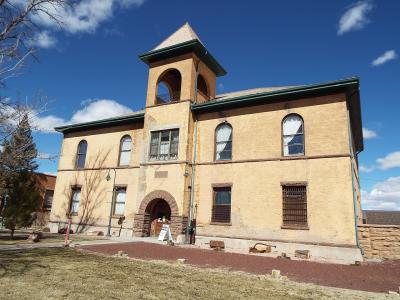
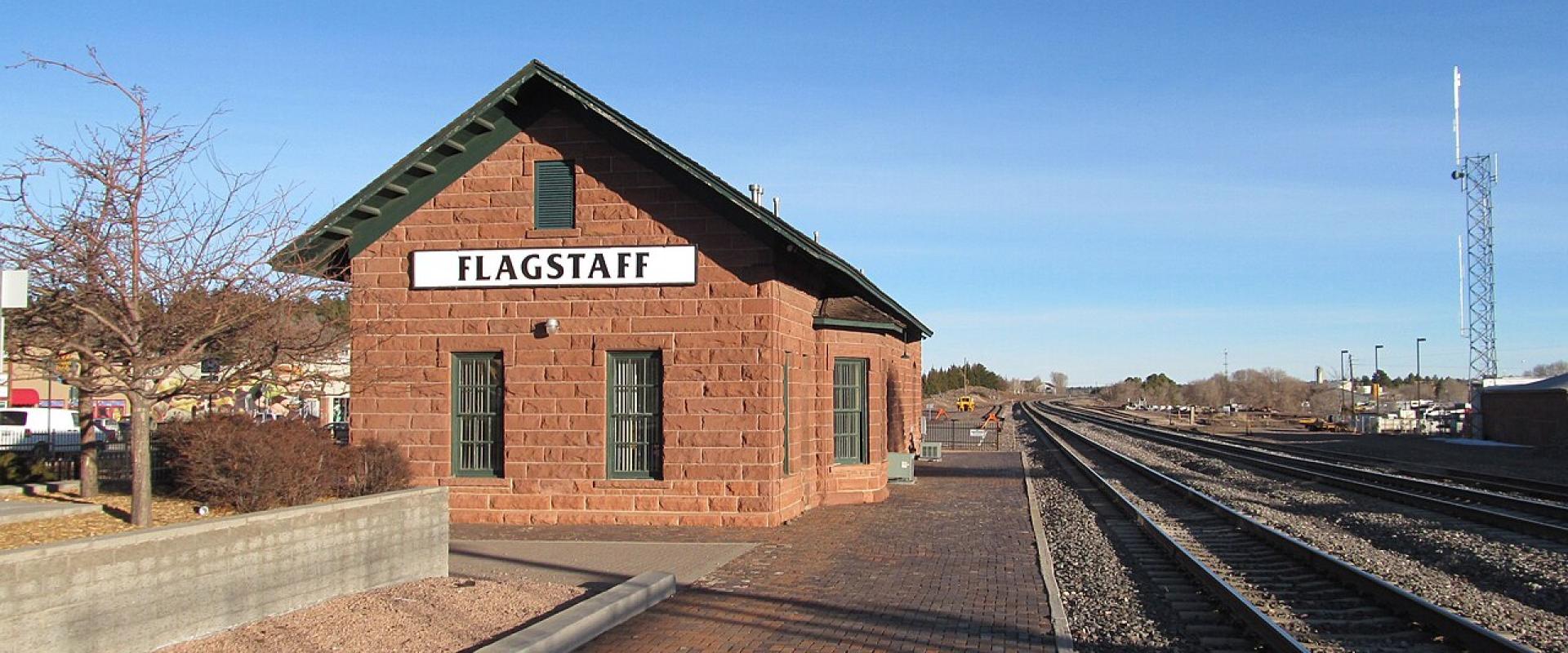
What to See Lowell Observatory sits on Mars Hill about a mile west of downtown. A day ticket covers tours of the 1896 Clark refractor, the Rotunda Museum, where the blink comparator Tombaugh used to find Pluto is displayed, the Astronomy Discovery Center that opened in November 2024, and telescope viewing after sunset. The Museum of Northern Arizona, on Fort Valley Road (US 180) north of downtown, occupies a 1936 building of local lava rock, with galleries on the Native peoples, archaeology, geology and life zones of the Colorado Plateau. Downtown itself is compact, and many of its historic buildings are made of red Moenkopi sandstone once quarried in the city. The Flagstaff Urban Trails System, more than 50 miles of paths, links neighbourhoods with the national forest.
East of the city, Walnut Canyon National Monument has 25 cliff dwelling rooms along a steep, paved trail. North on US 89, a 35-mile loop road links Sunset Crater Volcano, where a lava-flow trail runs below the cinder cone, with the pueblos of Wupatki. One $25 private-vehicle pass covers Sunset Crater and Wupatki for seven days, Walnut Canyon charges its own $25, and a $45 annual pass covers all three. Entrance fees at the three monuments are paid by card only.
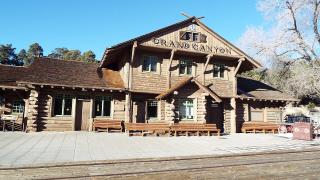
Getting There From Phoenix, Interstate 17 runs north to Flagstaff, where it meets Interstate 40. By road, downtown is about 149 miles from Phoenix Sky Harbor, about 29 miles from Sedona through Oak Creek Canyon on State Route 89A (closed by flooding since November 1, 2026; until it reopens, use SR 179 and Interstate 17, about 58 miles, and check az511.gov), about 34 miles from Williams and about 87 miles from Grand Canyon Village. Flagstaff Pulliam Airport, just south of the city, is mainly a general aviation airport with a limited number of scheduled flights, so check current routes. Amtrak's Southwest Chief stops at the downtown station on its run between Los Angeles and Albuquerque and beyond.
When to Go Flagstaff's record high is 97°F, so summer is when people from the low desert come up to cool off. July and August are the wettest months, with monsoon storms in the afternoons. Winters are cold and snowy: the Island Trail at Walnut Canyon may close for snow or ice, and roads and trails at Sunset Crater can close in winter weather. Lowell Observatory is closed on Tuesdays, and its telescopes open around sunset, as early as 4:30 p.m. in winter.
Best time to visit
May to October for the national monuments and hiking, when days are mild; July and August bring afternoon monsoon storms. Winter brings snow, early sunsets for stargazing and occasional trail closures at Walnut Canyon.
What to see in Flagstaff
Our picks first.
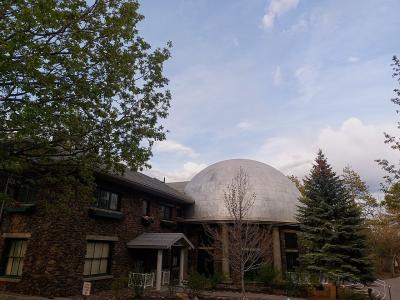
Lowell Observatory
The 1894 observatory on Mars Hill where Pluto was discovered, open afternoons and evenings for tours and telescope viewing
From $20 Historic Sites · Museums
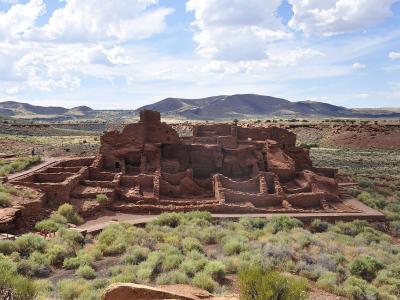
Wupatki National Monument
Stone pueblos built after the Sunset Crater eruption, including a 104-room village with a ballcourt
From $15 Historic Sites · National Parks
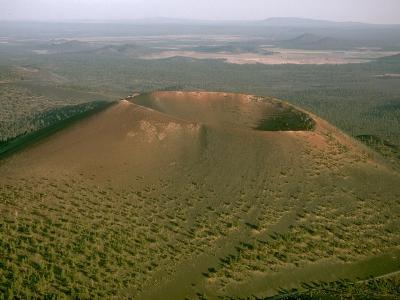
Sunset Crater Volcano National Monument
Arizona's youngest volcano, a cinder cone that erupted around 1085, with lava-flow trails at its base
From $15 National Parks · Natural Wonders
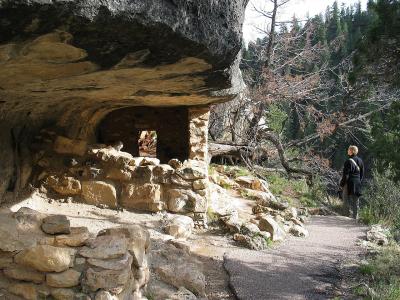
Walnut Canyon National Monument
Cliff dwellings built under limestone ledges about 900 years ago, reached by a steep stairway trail east of Flagstaff
From $15 National Parks · Hiking Trails
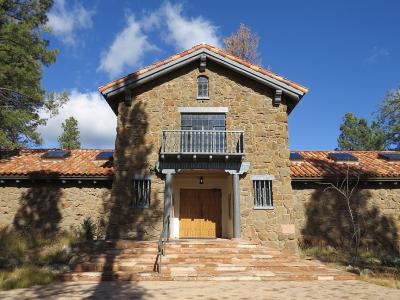
Museum of Northern Arizona
A museum of the Colorado Plateau's peoples, fossils and landscapes, founded in 1928, in a lava-rock building below the San Francisco Peaks
From $13 Museums · Dinosaurs & Fossils
Flagstaff by interest
The same sights, grouped by what you came for.
Did you know?
Checked facts about Flagstaff, each with its source.
-
Discovery
Pluto was discovered from Flagstaff in 1930
Lowell Observatory assistant Clyde Tombaugh used the Pluto Discovery Telescope in Flagstaff to take the photographic plates on which he found Pluto in February 1930.
Source: Lowell Observatory -
Discovery
Apollo astronauts trained on fake moon craters here
In 1967 NASA and the U.S. Geological Survey used dynamite to blast craters into a 44-acre cinder field near Flagstaff, copying the Apollo 11 landing site. The Cinder Lakes crater field was then used to train astronauts and test equipment.
Source: KNAU Arizona Public Radio -
Record
Flagstaff became the world's first International Dark Sky City
In 2001 Flagstaff was designated the world's first International Dark Sky City. The local movement to protect the night sky dates back to 1958.
Source: Flagstaff Dark Skies Coalition
Planning a visit to Flagstaff
Itineraries that include Flagstaff
Good to know
- Currency
- USD
- Language
- English