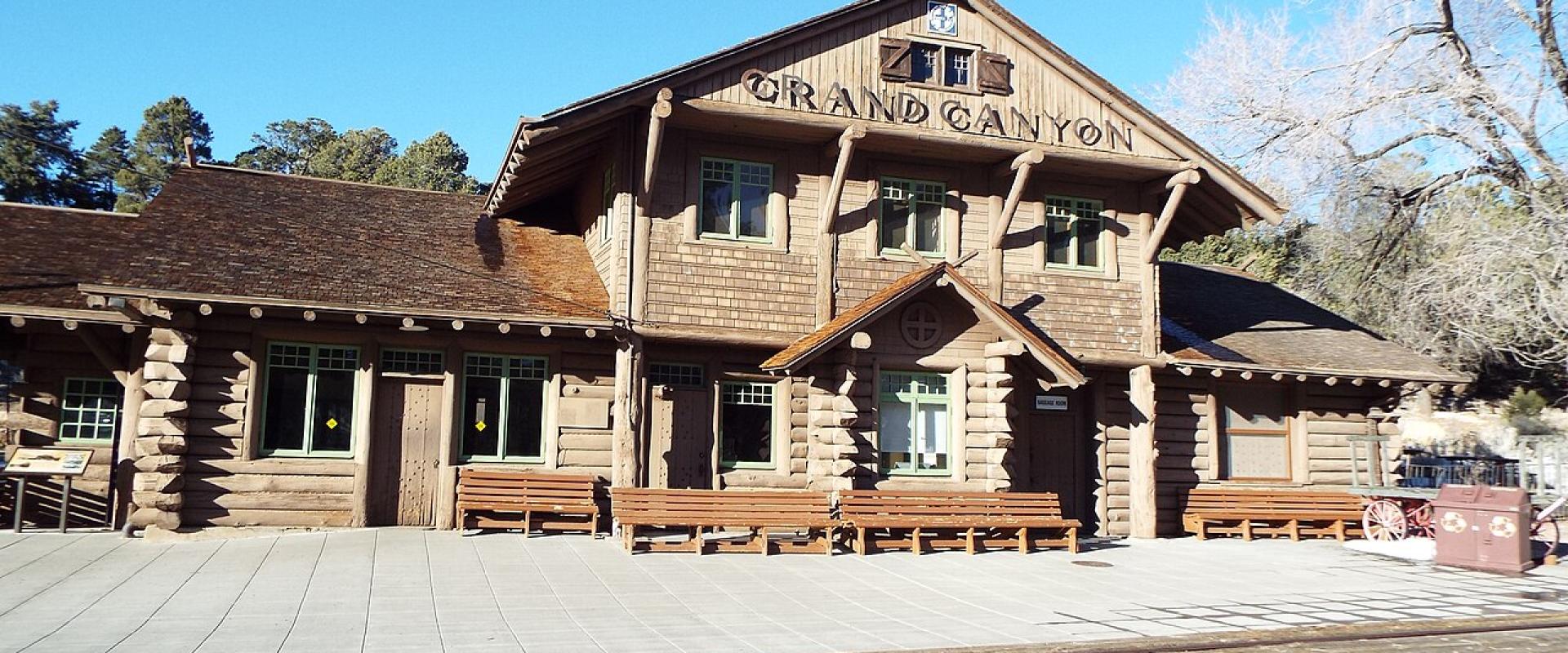
Grand Canyon Village
The South Rim's historic village, open all year, with lodging and water still limited after the 2026 flood
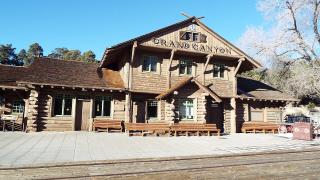
History The first scheduled passenger train from Williams reached the South Rim on September 17, 1901, and the railway's arrival set the pattern for the village. Nearly all early building was done by the concessioners, the Santa Fe Railway and the Fred Harvey Company, before the National Park Service drew up a plan. A 1924 master plan by NPS landscape architect Daniel Ray Hull placed a village square below the rim hotels and laid out residential areas on two small hills, and much of the landscaping in the late 1930s was done by the Civilian Conservation Corps. The historic district now includes 247 buildings. The architect Mary Colter designed several of its best-known structures, and her work continues out along the rim at Hermits Rest and, 23 miles east, at the Desert View Watchtower.
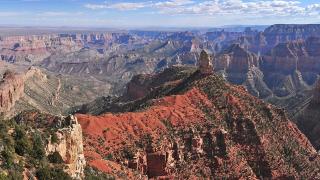
What to See Mather Point, a five-minute walk from the Grand Canyon Visitor Center, is the first view of the canyon for many visitors. From the Yavapai Geology Museum, a 1928 stone building on the rim, panoramic windows and labeled displays explain the rock layers in front of you. In the village, Kolb Studio was the home and photography studio of the Kolb brothers, and the Bright Angel Trail begins just west of it. Hermit Road follows the rim west for 7 miles past nine viewpoints to Hermits Rest, and the Rim Trail parallels it on foot. To the east, Desert View Drive (State Route 64) runs 23 miles to the Desert View Watchtower and the park's East Entrance.
Status as of November 2026 On August 29, 2026, a flash flood in Bright Angel Canyon destroyed a water intake and damaged the Transcanyon Waterline that supplies the South Rim. From August 31 all park concessions halted overnight accommodation, including Phantom Ranch, and the South Rim moved to Stage 4 water restrictions. Hotels in the gateway town of Tusayan, outside the park, were not affected. On September 19 the park projected that pumping would start by November 16 and that water would reach residents by Thanksgiving, letting concessioners begin a phased return of overnight guests. NPS called those dates tentative. As of November 2026 the park's home page (updated November 3) still said overnight lodging was suspended because of the Stage 4 water restrictions, and its operations page (updated November 4) listed Yavapai Lodge and the RV park as closed and Mather Campground as open for dry camping only.
Day use continues. As of November 4, 2026, the visitor center was open daily from 9 am to 4 pm, the Yavapai Geology Museum, Kolb Studio and Verkamps Visitor Center from 8 am to 6 pm, and the free shuttles were running their fall schedule through November 30. Water is available from large tanks at the Bright Angel and South Kaibab trailheads, but the park asks visitors to bring their own.
Entry and Fees No reservation or timed entry is needed. The park does not accept cash. A private vehicle pays $35, a motorcycle $30 and a person on foot or bicycle $20, each valid for seven days. Since January 1, 2026, non-US residents aged 16 and over also pay $100 per person unless they enter with an annual or America the Beautiful pass; the nonresident America the Beautiful pass costs $250.
Getting There The South Entrance is 6 miles north of Tusayan. NPS puts the drive at about 60 minutes from Williams and Interstate 40, 90 minutes from Flagstaff and about four hours from Phoenix. The Grand Canyon Railway also runs daily from Williams to the village depot. The North Rim is about 213 road miles away by way of the East Entrance, Cameron and Jacob Lake.
Best time to visit
November through February is the least crowded time, according to NPS, but expect snow and freezing nights. Spring break, Memorial Day to Labor Day and holiday weeks are the busiest. Below the rim, NPS warns, summer temperatures in the shade routinely pass 100°F.
What to see in Grand Canyon Village
Our picks first.
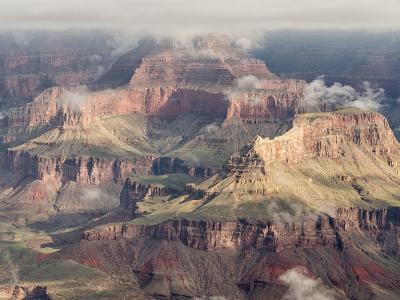
Mather Point
The South Rim overlook a five-minute walk from the visitor center, with views 30 miles east and 60 miles west
From $20 National Parks · Natural Wonders
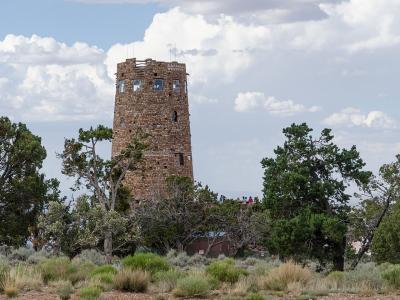
Desert View Watchtower
Mary Colter's 1932 stone tower at the east end of the South Rim, looking down on the Colorado River where Marble Canyon opens out
From $35 Architectural Landmarks · National Parks
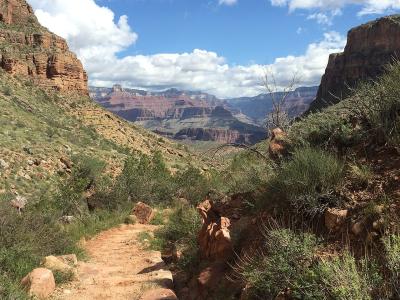
Bright Angel Trail
The South Rim's most-used trail into the canyon, open to River Resthouse as of November 2026 but with its water stations off
From $20 National Parks · Hiking Trails
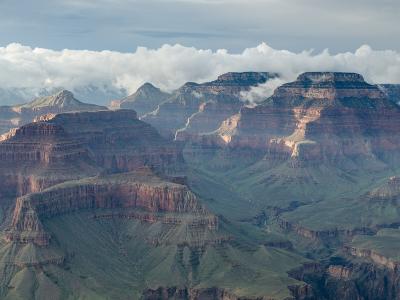
Hermit Road
Seven miles of South Rim road west to Mary Colter's Hermits Rest, shuttle-only most of the year and open to cars only in winter
From $20 National Parks · Scenic Drives
Grand Canyon Village by interest
The same sights, grouped by what you came for.
Did you know?
Checked facts about Grand Canyon Village, each with its source.
-
Film & TV
Kolb Studio screened the same river film until 1976
Brothers Emery and Ellsworth Kolb ran the Colorado River in 1911 and turned the footage into the film "Shooting the Rapids of the Colorado River Canyons." It was shown every day in the auditorium of Kolb Studio on the rim until Emery Kolb died in 1976.
Source: National Park Service -
History
The South Rim's oldest building is still a guest cabin
William "Buckey" O'Neill built his cabin on the South Rim in 1895, and the Park Service considers it the oldest continuously standing structure there. O'Neill died in Cuba in 1898 with Theodore Roosevelt's Rough Riders; the cabin is still rented as part of Bright Angel Lodge.
Source: National Park Service -
History
El Tovar opened as the West's most luxurious hotel
When El Tovar opened on the South Rim in 1905, it was the most luxurious hotel west of the Mississippi River, according to the National Park Service. It followed the first Santa Fe Railway train to the rim, which arrived on September 17, 1901.
Source: National Park Service
Planning a visit to Grand Canyon Village
Good to know
- Currency
- USD
- Language
- English
Quick Facts
Book your stay
Questions people ask
More places in Grand Canyon & Kaibab Plateau
Grand Canyon & Kaibab Plateau
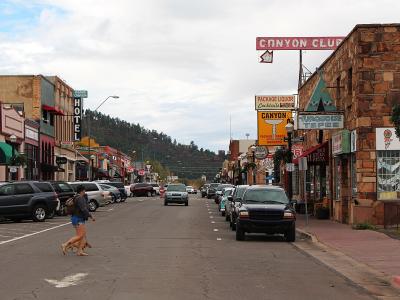
Williams
A pine-country Route 66 town on I-40, an hour from the South Rim and the starting point of the Grand Canyon Railway
Grand Canyon & Kaibab Plateau
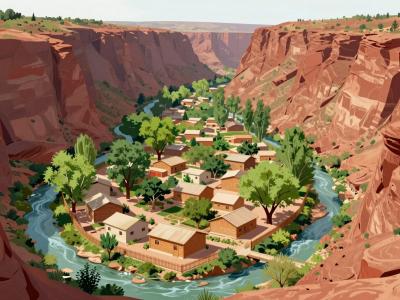
Supai
The Havasupai Tribe's village on the floor of Havasu Canyon, 8 miles by trail from the nearest road, open to visitors only with a tribal permit
Grand Canyon & Kaibab Plateau
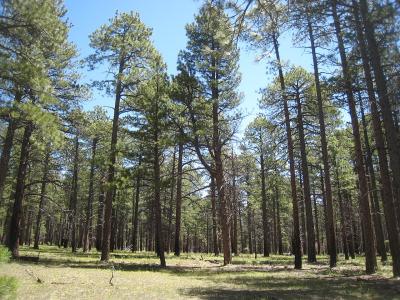
Jacob Lake
The crossroads on the Kaibab Plateau: the last fuel and food before the North Rim, which closes every winter