Desert Parks and Canyons Most visitors come for the saguaro. The Rincon Mountain District, on the east side, has an 8-mile paved loop through an older cactus forest and 128 miles of trail. The Tucson Mountain District, on the west side, has a denser, younger stand, about 43 miles of trail and a graded dirt loop. One entrance pass covers both for seven days.
The Arizona-Sonora Desert Museum, a mile before the western district on Kinney Road, is more zoo and botanical garden than museum, with about 85 percent of it outdoors. Combining the two makes an easy day on the west side. North-east of the city, Sabino Canyon cuts into the Santa Catalinas, with an electric shuttle up the canyon road and trails that climb far above it. The drive from downtown to the top of Mount Lemmon, the highest Santa Catalina peak, takes about 90 minutes and climbs from desert into pine forest.
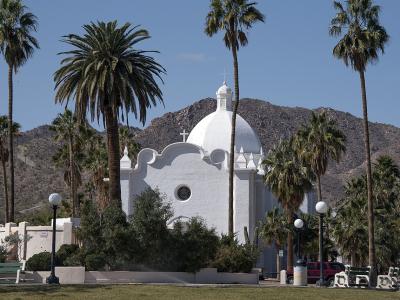
History South of Town Mission San Xavier del Bac stands about 9 miles south of downtown, just off Interstate 19. Father Kino founded the mission in 1692, and the present white church was built between 1783 and 1797 by O'odham workers under Franciscan direction. It remains the parish church of the community of Wa:k, so visit it as a place of worship as well as a landmark. Less than an hour south of the city are the Tumacácori mission ruins and Tubac's presidio site.
Food In December 2015 UNESCO named Tucson the first Creative City of Gastronomy in the United States. The citation goes beyond Mexican restaurants to the region's agricultural heritage and food traditions, which reach back to O'odham irrigation farming of corn, beans, squash and melons along the Santa Cruz River. The tourism office publishes a guide to the local Mexican food scene if you want a starting point.
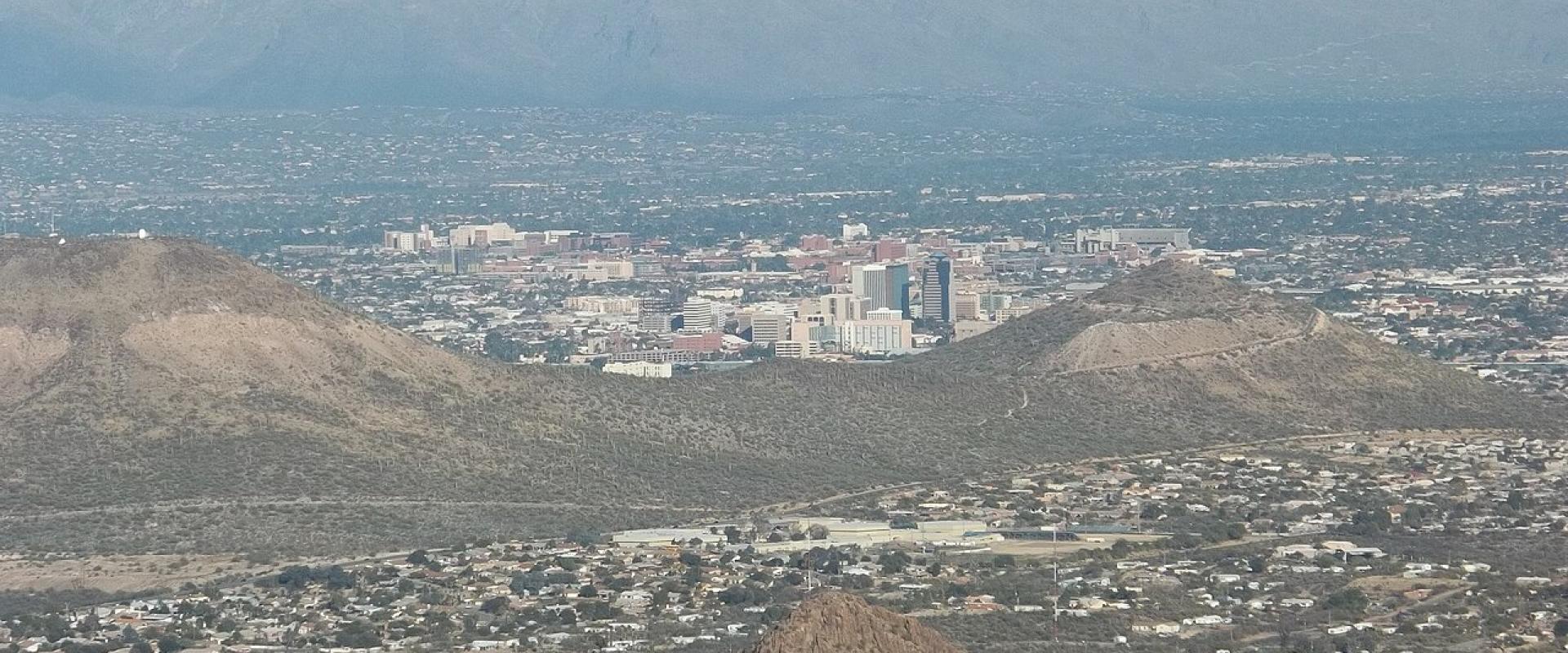
Above the City Sentinel Peak, also called "A" Mountain, rises on the western edge of the downtown historic district, and the base of the peak is the site of an archaeological dig into the area's earliest settlement, about 4,000 years old. After dark, Saguaro National Park is worth a trip. In 2023 it was certified as an Urban Night Sky Place, only the ninth in the world, and it runs star parties and night hikes. Tucson is also a gateway community on the 800-mile Arizona Trail.
Getting Around Tucson International Airport has nonstop flights from cities around the US, and Phoenix is less than two hours away by road. A car is close to essential for the parks, as both Saguaro districts lie at the city's edges. Cyclists get The Loop, more than 130 miles of paved, car-free path around the city. Search for Saguaro's districts by street address rather than by name, since the park warns that map apps confuse the two.
When to Go Daytime highs in winter run from the low 50s to the high 70s Fahrenheit, while summer reaches the low 110s. Late summer brings the monsoon, usually mid-July to mid-September, with heavy storms and a real flash-flood risk in washes. January to April is the busiest season for ranger programs at Saguaro. The Tucson Gem, Mineral and Fossil Showcase is the biggest event on the city's calendar. Arizona rejects daylight saving time, so Tucson stays on Mountain Standard Time all year.
Best time to visit
October to April for hiking and the desert parks; wildflowers peak in March and saguaros bloom from late April into June. Summer highs top 100°F.
What to see in Tucson
Our picks first.
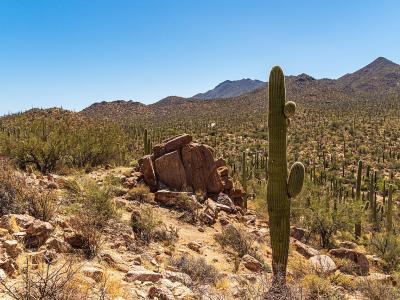
Saguaro National Park: Tucson Mountain District
Saguaro West: a dense young cactus forest, a dirt loop drive and Hohokam petroglyphs
From $15 National Parks · Scenic Drives
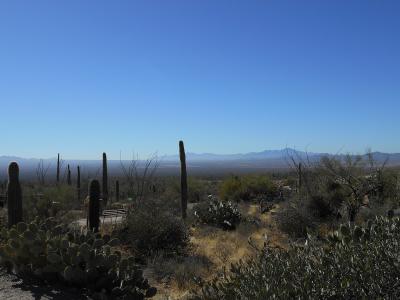
Arizona-Sonora Desert Museum
A zoo, botanical garden and aquarium in one, mostly outdoors, west of Tucson
From $2 Museums · Wildlife Viewing
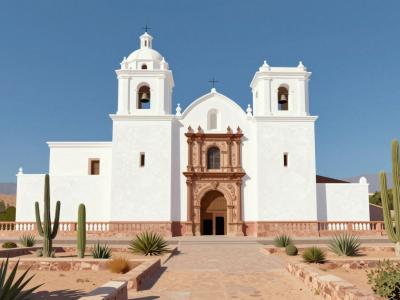
Mission San Xavier del Bac
A working 18th-century church on the Tohono O'odham Nation, 9 miles south of Tucson
Architectural Landmarks · Historic Sites
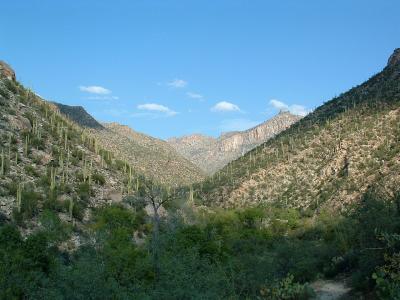
Sabino Canyon
A creek-cut canyon in the Santa Catalinas, with an electric shuttle and long trails
From $5 Natural Wonders · Outdoor Recreation
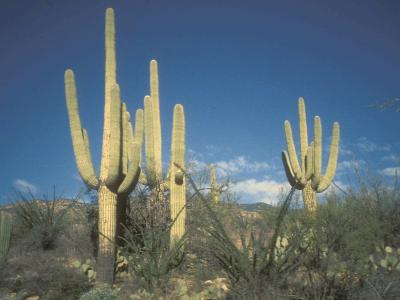
Saguaro National Park: Rincon Mountain District
The older cactus forest east of Tucson, with an 8-mile paved loop and a wilderness behind it
From $15 National Parks · Natural Wonders
Tucson by interest
The same sights, grouped by what you came for.
Did you know?
Checked facts about Tucson, each with its source.
-
Food & Drink
Tucson was the first US UNESCO City of Gastronomy
In December 2015 UNESCO designated Tucson a City of Gastronomy, making it the first city in the United States to receive the title.
Source: Edible Baja Arizona (via Tucson City of Gastronomy) -
Film & TV
Old Tucson was built in 1939 for one film
Columbia Pictures built Old Tucson in 1939, putting up more than 50 buildings for the film Arizona (1940). More than 500 films were later shot there at least in part, including John Wayne's Rio Bravo and El Dorado.
Source: Cronkite News -
Record
Tucson's Boneyard holds over 4,000 military planes
The 309th Aerospace Maintenance and Regeneration Group at Davis-Monthan Air Force Base is the US government's and military's only aircraft 'Boneyard'. It holds more than 4,000 planes on 2,600 acres.
Source: Pima Air & Space Museum
Planning a visit to Tucson
Itineraries that include Tucson
Good to know
- Currency
- USD
- Language
- English