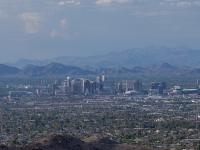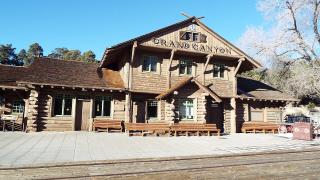
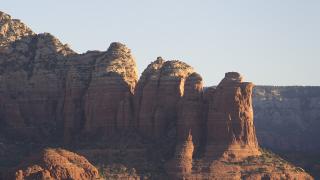
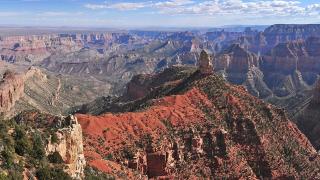
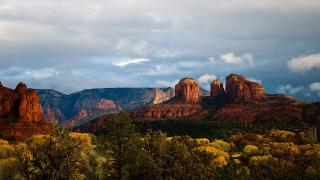
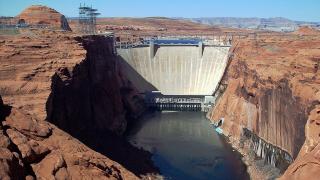
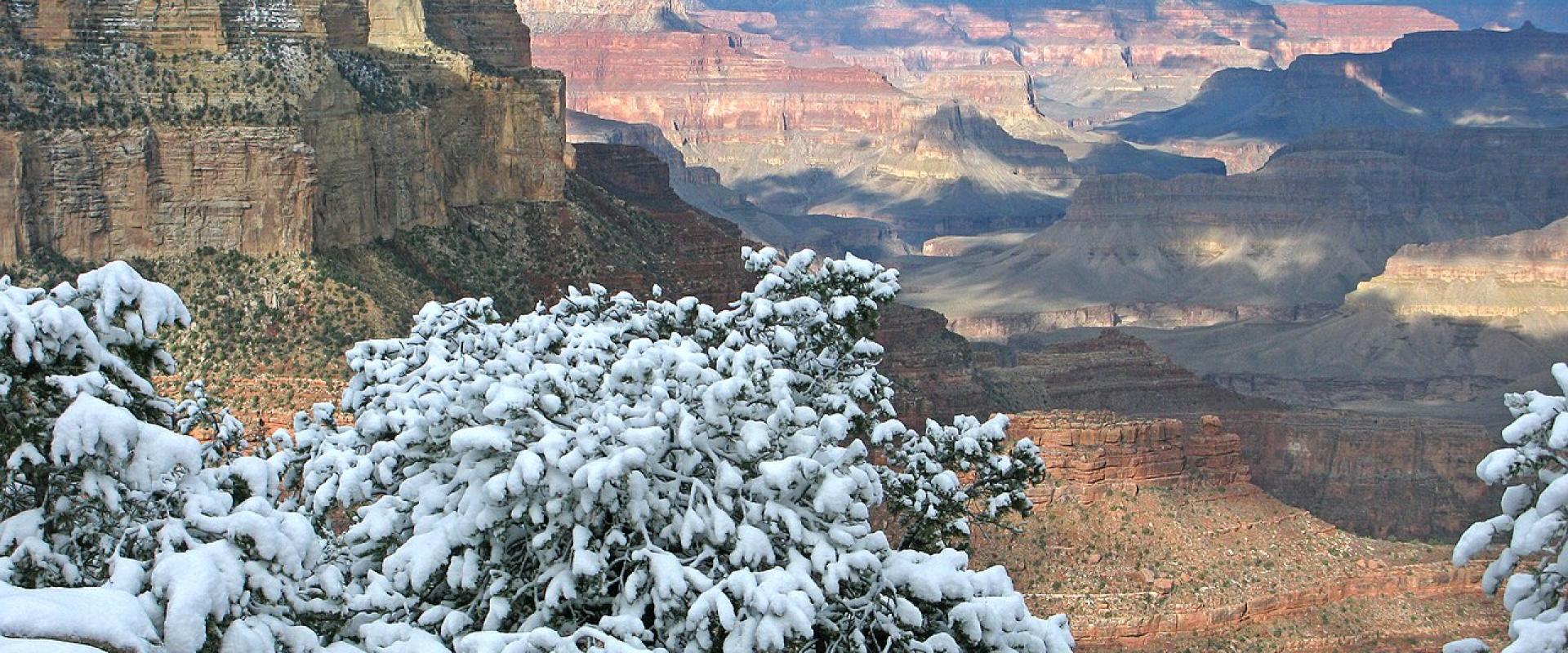
Winter splits Arizona in two. The low deserts around Phoenix and Tucson are in their high season, with January highs averaging 67 to 68 °F, while the plateau country around Flagstaff and the Grand Canyon gets snow, icy trails and nights well below freezing. Both halves are open; you just pack differently for each.
This guide covers what is open from December to March, what changes at the Grand Canyon in winter, and the closures in force in late 2026.
Winter at a glance
| Desert south (Phoenix, Tucson) | High north (Flagstaff, Grand Canyon) | |
|---|---|---|
| January average high / low | Phoenix 68 / 46 °F; Tucson 67 / 41 °F | Flagstaff 43 / 18 °F; Grand Canyon 44 / 16 °F |
| Snow | Close to none (Tucson 0.1 in in February) | Flagstaff averages 18.5 in (Dec), 20.9 in (Jan), 19.3 in (Feb), 15.6 in (Mar) |
| What it's good for | Desert hiking, cactus parks, missions, mining towns | Snow on the canyon, quieter viewpoints |
| Main hazard | Cold nights, short days | Ice, road closures, rapid weather changes |
Grand Canyon: South Rim open, North Rim closed
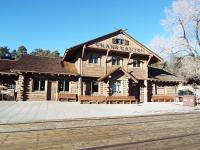
The South Rim is open all year, and the East Entrance at Desert View is open 24 hours. The 23-mile Desert View Drive out to the Desert View Watchtower is usually open all year unless closed briefly by snow and ice.
The North Rim is not. The North Rim and State Route 67 are closed to all vehicles every year from December 1 to May 14. In 2026 the gate closes on November 30, or earlier with the first major snowstorm. In winter the North Rim can only be reached on foot, snowshoes or skis, and any overnight stay there needs a backcountry permit.
What changes on the South Rim in winter:
- Hermit Road opens to private vehicles (under 22 feet) in December, January and February, unless closed by snow. The rest of the year it is shuttle-only. There is no Hermit Road shuttle in winter.
- Trails: NPS says trails and walkways may be icy and recommends over-the-shoe traction devices and hiking poles.
- Roads: snow and ice can temporarily close park roads. Call 928-638-7496 before driving for road updates.
- Backcountry: from November 15 to February 28, corridor campers can stay up to four nights per campground per trip instead of two.
The Grand Canyon in winter 2026-27
This winter is not a normal one. After the August 29, 2026 flood cut the South Rim's water supply:
- Lodging: all in-park overnight lodging has been halted since August 31. NPS's tentative timetable, from September 19, was for pumping to restart by November 16 and for concessioners to begin a phased return of overnight guests around Thanksgiving. Hotels in Tusayan, outside the park, are not affected.
- Water: Stage 4 restrictions; bring your own drinking water. Mather Campground is open all year but dry camping only for now.
- Inner canyon: the Bright Angel Trail is open to the River Resthouse, and the South Kaibab Trail and River Trail reopened on October 26. Water at Mile-and-a-Half, Three-Mile and Havasupai Gardens is off for the rest of the winter. Phantom Ranch, the Black and Silver bridges and the whole North Kaibab Trail remain closed, so you cannot cross the river.
- Fires: all wood and charcoal fires are banned on the South Rim.
Flagstaff and the plateau
Flagstaff is a snow town: NOAA's normals give it about 90 inches a season, most of it from December to March. Snow can arrive as early as October and fall as late as May. Plan winter driving on Interstates 17 and 40 around the forecast, and check az511.gov or call 1-888-411-7623 before setting out.
Some high-country sites change their schedule in winter:
- Desert View Campground closes for the season; its 2027 season runs April 10 to October 15.
- Monument Valley runs winter hours from October 17, with entry first come, first served. Motorcycles are not allowed on the dirt loop drive at any time.
- Navajo National Monument is open all year, but snow and ice can make the road impassable; Betatakin and Keet Seel trips do not run in winter.
- Petrified Forest is open all year except Thanksgiving and Christmas.
The desert in winter
This is when the southern parks are at their most comfortable. NPS's Organ Pipe Cactus National Monument describes summer as usually above 100 °F and winter lows of 30 to 40 °F, so the days are mild but nights are cold. Desert hiking advice still applies in winter: carry water, wear sun protection and finish before dark.
Good winter bases and sights:
- Tucson: both districts of Saguaro National Park ($25 per vehicle for 7 days), and the missions to the south.
- Phoenix: Lost Dutchman State Park in the Superstition Mountains ($10 to $20 per vehicle).
- Cochise County: Chiricahua National Park, which has no entrance fee, and Kartchner Caverns, where cave tours are available year-round.
- Organ Pipe Cactus on the Mexican border ($25 per vehicle).
Time zones in winter
Arizona does not use daylight saving time, and in winter the Navajo Nation is on the same Mountain Standard Time. From November 1, 2026 to March 14, 2027, the whole state shares one time; after that, Navajo land runs an hour ahead again.
Sedona this winter
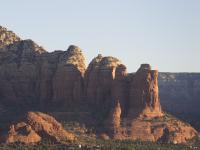
The November 1, 2026 flood closed State Route 89A through Oak Creek Canyon between Sedona and Kachina Village, with no reopening estimate as of November 3. On November 6 ADOT reopened the road from Sedona to Slide Rock State Park, which Arizona State Parks said would reopen on November 7; north of the park the canyon road stays closed. Access to Crescent Moon and Grasshopper Point was restricted or unconfirmed. Visit Sedona said most businesses in the area were open. Reach Sedona via Interstate 17 and check closures before you go.
Holidays
Many sites close on Thanksgiving (November 26, 2026), Christmas Day and New Year's Day. Among them: the visitor centers at Navajo National Monument and Canyon de Chelly, and Petrified Forest (Thanksgiving and Christmas). Lake Powell Navajo Tribal Park, which runs Antelope Canyon, closes on all major Navajo Nation holidays, including Family Day, the day after Thanksgiving. Slide Rock, Kartchner Caverns and Lake Havasu state parks close on Christmas Day.
Winter packing
- Warm layers, a hat and gloves for the rims at any hour.
- Traction devices and poles for icy paths at the Grand Canyon.
- A spare car key, a full tank and extra water in the car.
- Sunscreen in the desert, even in January.
Details checked 6 November 2026.