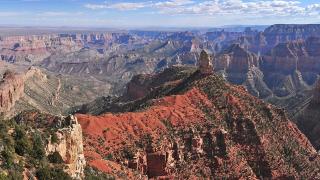
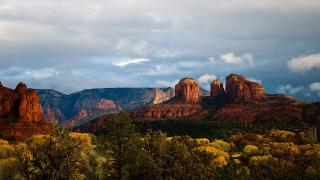
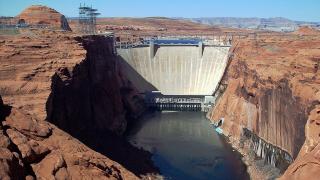
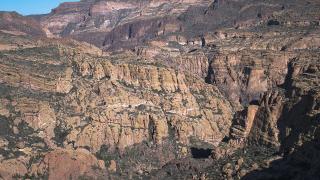
Twenty-two federally recognised tribes have land in Arizona, according to the University of Arizona's Native Peoples Technical Assistance Office. Each nation is sovereign and sets its own rules for visitors, and many places can only be visited with a local guide.
This guide covers how to visit respectfully, which ancestral sites are run by the National Park Service, and the published rules of the tribal parks most visitors see. Fees and rules come from each nation's or agency's own pages, checked in November 2026.
The nations
Besides the Navajo Nation, the nations include the Hopi Tribe, the Havasupai Tribe and the Hualapai Tribe. The Inter Tribal Council of Arizona also lists members including:
- Ak-Chin Indian Community
- Cocopah Indian Tribe
- Colorado River Indian Tribes
- Fort McDowell Yavapai Nation
- Fort Mojave Indian Tribe
- Gila River Indian Community
- Kaibab Band of Paiute Indians
- Pascua Yaqui Tribe
- Salt River Pima-Maricopa Indian Community
- San Carlos Apache Tribe
- Tohono O'odham Nation
- White Mountain Apache Tribe
- Yavapai-Apache Nation
- Yavapai-Prescott Indian Tribe
Several of these lands cross state lines. The Colorado River Indian Tribes reservation at Parker spans the river into California.
Visiting tribal land: the rules that apply almost everywhere
- You need a permit or pass. Navajo Nation Parks & Recreation says all areas of the Navajo Nation are closed to non-Navajos unless they hold a valid pass or permit from the department or another tribal authority. Being there without one counts as trespassing.
- National park passes are not accepted at Navajo tribal parks.
- Ask before photographing people. The Navajo Nation asks visitors to get permission before photographing Navajo people. Commercial photography or video needs a permit.
- Hopi villages: no recording at all. The Hopi Cultural Preservation Office bans recording of any kind in and around Hopi villages. That includes photos, video, audio, sketching and note-taking, and especially during ceremonies. Publishing what you saw needs the office's prior consent. Not every ceremony is open to the public. Unless you are invited, stay out of kivas and keep to the edge of dances. Dress as you would for a wedding.
- No drones. Drones are banned at all Navajo tribal parks and will be confiscated. They are also banned in Canyon de Chelly National Monument.
- No alcohol or drugs on the Navajo Nation, and no firearms on tribal lands.
- No climbing on monuments, buttes or sacred sites. The Navajo Nation calls this a religious request and enforces it. Scattering cremated remains is strictly forbidden.
- Stay out of homes and yards. The Navajo Nation asks visitors not to wander through residential areas. The Hopi office compares looking into windows with a stranger helping himself to a tour of your home.
- Don't touch shrines or offerings. If you're not sure what something is, leave it alone.
Time zones: check the clock
Arizona does not observe daylight saving time (A.R.S. 1-242). The Navajo Nation does. From March to November it is one hour ahead of Flagstaff, Page and the Grand Canyon, and on the same time as Colorado, New Mexico and Utah. Tour times, office hours and NPS visitor centre hours on Navajo land follow Navajo time. From November to March the two match.
| Park | Entry (2026) | Key rules |
|---|---|---|
| Monument Valley | $10 per person per day plus $15 per vehicle on the park page ($8 per person on the separate fee page, so confirm at purchase) | 17-mile dirt loop drive at your own risk, with deep sand; no motorcycles on the loop. Winter hours from October 17: drive 8 a.m. to 5 p.m., last entry 2:30 p.m. |
| Lake Powell Navajo Tribal Park (Upper and Lower Antelope Canyon) | $15 per person, plus the tour price | Guides are mandatory. Two-hour limit inside Upper Antelope. No photography or filming permits for Upper or Lower |
| Tséyi' Diné Heritage Area (Canyon de Chelly floor) | set by tour operator | "All Navajo Tribal Park areas are by Guided Tours only." Office 8 a.m. to 5 p.m. daily |
Hiking or camping in a Navajo tribal park needs a Backcountry Permit, and in most places a guide too. The Lake Powell park's backcountry permit is $15 per person per night. The Navajo Nation says its trails are unimproved, rescue is not readily available, and the flash flood risk is highest in the July to September monsoon. Navajo parks close on all major holidays observed by the Navajo Nation.
NPS-run ancestral and cultural sites
Some of the best-known ancestral sites are managed by the National Park Service, several of them inside or next to the Navajo Nation.
Canyon de Chelly National Monument. There's no entrance fee. The North and South Rim drives, with ten overlooks, are paved and open all year. The White House Trail is the only trail you can hike without a permit or guide. It is 2.5 miles round trip with about 600 feet of descent, and NPS listed it as open in late October 2026. NPS says the Navajo Nation may later run the area seasonally and charge a fee. Every other trip to the canyon floor needs an authorised Navajo guide and a backcountry permit from the Navajo Parks and Recreation office near Cottonwood Campground. The Welcome Center is open 8 a.m. to 5 p.m. and closed on Thanksgiving, Christmas and New Year's Day.
Navajo National Monument. Betatakin can be visited only on ranger-led hikes, offered from Memorial Day to Labor Day and generally on weekends. These are strenuous 3- or 5-mile round trips that take 3 to 5 hours. Keet Seel trips are offered twice each in April, May, September and October, when staff are available. Inscription House is closed indefinitely, partly at the request of local residents. The visitor centre is open 9 a.m. to 5 p.m., Navajo time.
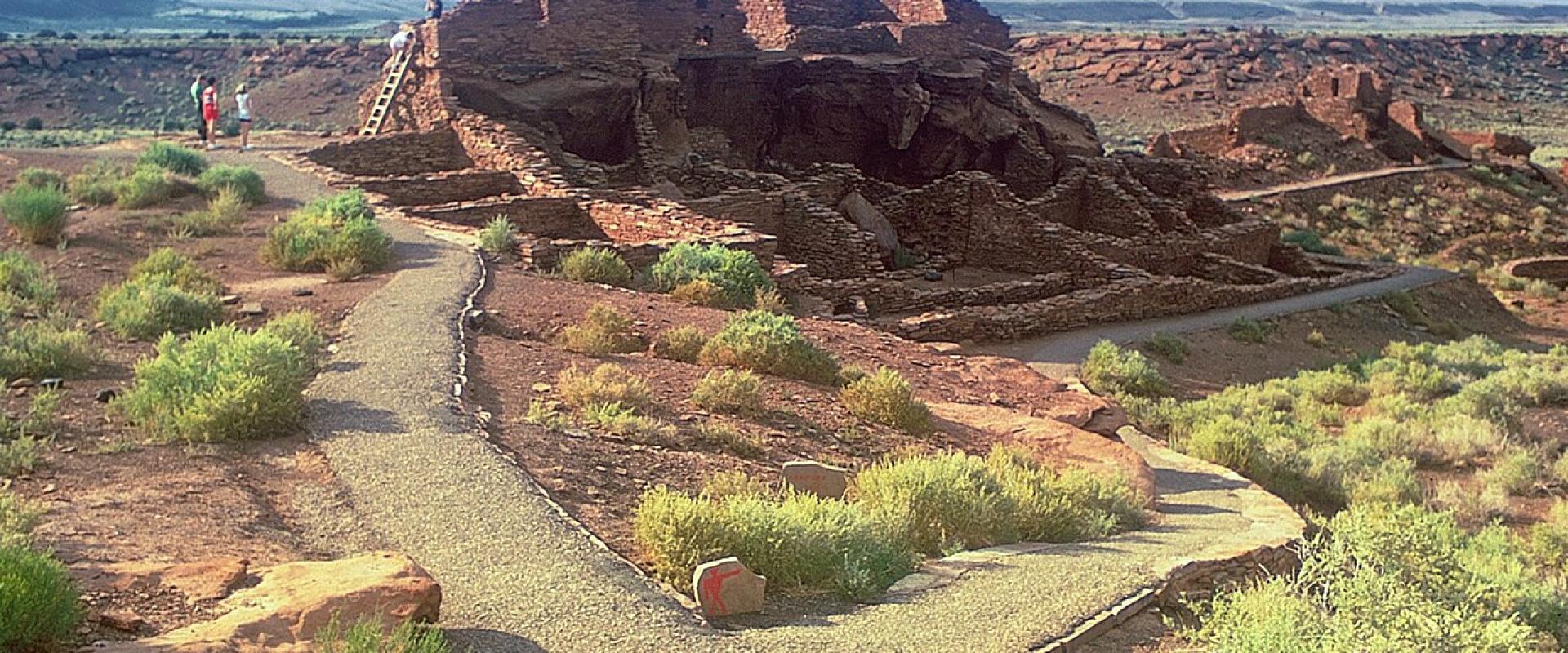
Wupatki National Monument. Ancestors of today's Pueblo communities built a trade centre here in the early 1100s. Wupatki Pueblo has more than 100 rooms, a ball court and a natural blowhole. Lomaki means "beautiful house" in Hopi. NPS says these sites "represent the footprints of their ancestors" for Indigenous peoples.
Montezuma Castle. Entry is $10 per adult.
Homolovi State Park, near Winslow. This is run by Arizona State Parks rather than NPS and protects ancestral Hopi sites. As of November 2026, the Homolovi I site is temporarily closed after heavy rain and erosion damage.
Havasupai
Havasu Falls is on the Havasupai Indian Reservation, not in Grand Canyon National Park. Every visitor needs a permit from havasupaireservations.com:
- Prices (2026): $455 per person for a 3-night campground permit, or $2,277 for a 3-night lodge permit covering up to four people.
- Check-in: the trip leader checks in for the whole group at Grand Canyon Caverns Inn, Mile Marker 115 on Route 66 near Peach Springs, with photo ID.
- Transfers and refunds: permits cannot be resold or transferred. Cancelling at least 90 days ahead gets a 50% refund. Later cancellations get nothing.
- At Hilltop: no camping and no sleeping in vehicles.
- Heat: the tribe advises not hiking between 10 a.m. and 3 p.m. in excessive heat.
On August 31, 2026 the tribe said that flood reports that summer were about Grand Canyon National Park, not Havasupai, and that its trails were passable.
Museums run by or with Native nations
- Heard Museum, Phoenix. It acknowledges that it stands within the O'otham Jeved, the homeland of the Akimel O'otham, who are part of the Four Southern Tribes with the Gila River, Salt River Pima-Maricopa and Ak-Chin communities and the Tohono O'odham Nation.
- Museum of Northern Arizona, Flagstaff. Native Americans pay $13 instead of the $18 general admission.
Details checked November 6, 2026.