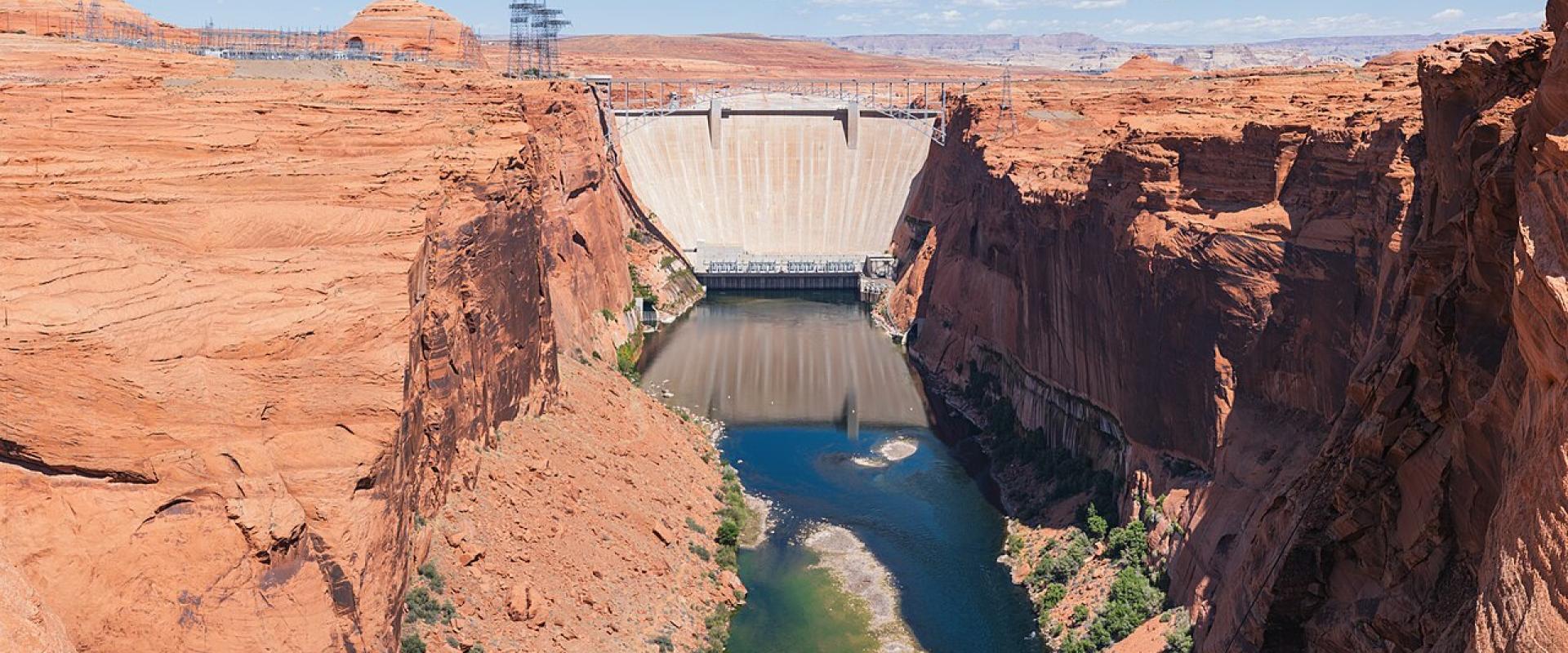
Glen Canyon Dam
A 710-foot concrete arch dam that created Lake Powell and gave the town of Page its start
- Hours
- Carl Hayden Visitor Center 9 a.m.-5 p.m. Arizona time (Bureau of Reclamation Glen Canyon D...
- Where
- Page, Page & Monument Valley
- Directions
- Directions
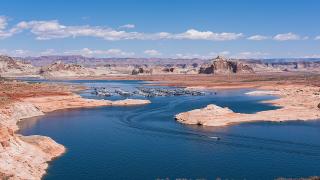
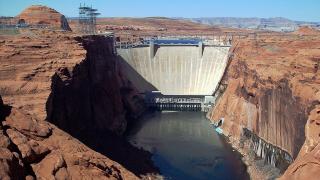
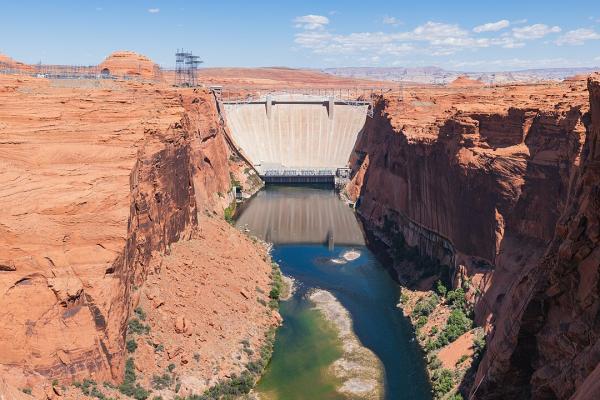
Glen Canyon Dam rises 710 feet above bedrock in the sandstone walls of Glen Canyon, on the north edge of Page. The Bureau of Reclamation calls it the second-highest concrete-arch dam in the United States, after Hoover Dam, which stands 726 feet. It holds back Lake Powell, with a storage capacity of 25.16 million acre-feet. The dam's eight generators have a combined capacity of 1,320 megawatts and produce about five billion kilowatt-hours of electricity a year.
Construction began with a dynamite blast on October 15, 1956, set off when President Dwight D. Eisenhower pressed a telegraph key in Washington. The site was so remote that a bridge had to come first. The Glen Canyon Bridge, 1,271 feet long and 700 feet above the river, was finished in January 1959. It cut a 200-mile trip around the canyon to less than a quarter mile. The river was sent through two diversion tunnels, each 3,000 feet long. Crews then dug 137 feet down to bedrock, and concrete placement began in June 1960. Buckets carried the concrete across the canyon on an aerial tramway, 24 hours a day. The last of more than 400,000 bucketloads went in on September 13, 1963. The reservoir began filling that March, and it took until June 22, 1980 to reach full pool at 3,700 feet. The first power was generated on September 4, 1964. The First Lady, Lady Bird Johnson, dedicated the dam on September 22, 1966.
Drought has changed the picture since. On November 5, 2026, the National Park Service recorded Lake Powell at 3,537.11 feet. That is more than 160 feet below full pool and about 11 feet above the 3,525-foot target that Reclamation's drought plan tries to protect. The minimum level for generating power is 3,490 feet.
The Carl Hayden Visitor Center stands beside the dam. The Park Service lists it as one of Glen Canyon National Recreation Area's visitor centers. US 89 crosses the Glen Canyon Bridge right next to it, so you can see the dam face and the river far below from the road. Recreation.gov, the federal booking site, says tours of Glen Canyon Dam are closed. Ask at the visitor center rather than planning around one.
Categories
More photos coming soon
Opening Hours
- Open
- Carl Hayden Visitor Center 9 a.m.-5 p.m. Arizona time (Bureau of Reclamation Glen Canyon Dam page, last updated February 23, 2026).
Hours and prices change, especially out of season. Check with the venue before you go.
Nearby Attractions
Other places to visit in Page
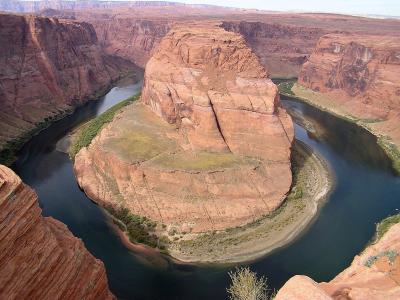
Horseshoe Bend
An overlook 1,000 feet above a 270-degree bend of the Colorado River, a short walk from US 89
Natural Wonders · Hiking Trails
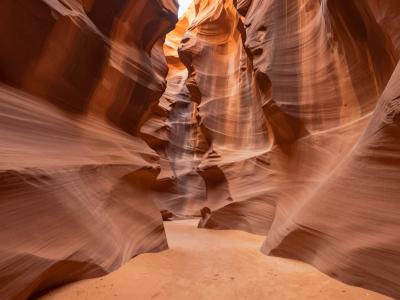
Upper Antelope Canyon
A Navajo slot canyon near Page, wider at the bottom, entered only with a Navajo guide
From $15 Natural Wonders · Native American Heritage
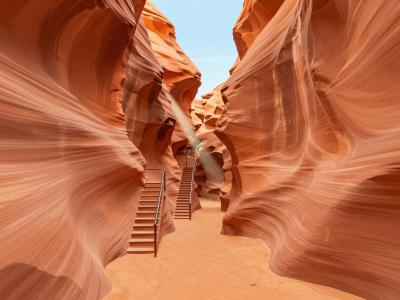
Lower Antelope Canyon
The narrow, stair-laced Navajo slot canyon near Page, visited only on guided tours
From $15 Natural Wonders · Native American Heritage
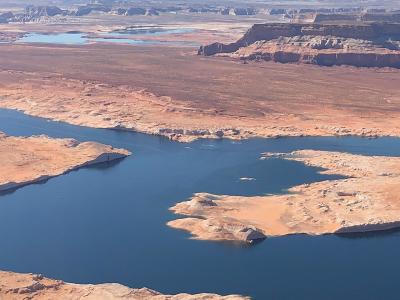
Wahweap and Lake Powell
Lake Powell's south end near Page, with a marina, boat tours and shorelines changed by low water
From $15 National Parks · Outdoor Recreation
Questions people ask
Quick Facts
Best Time to Visit
April to June and September to October. Glen Canyon visits peak in June and July, when summer heat is hard on the exposed Horseshoe Bend trail. Flash floods in the slot canyons are most likely from July to September.