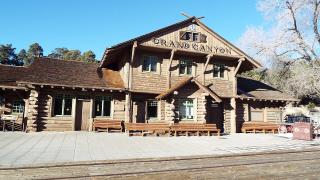
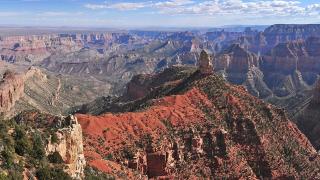
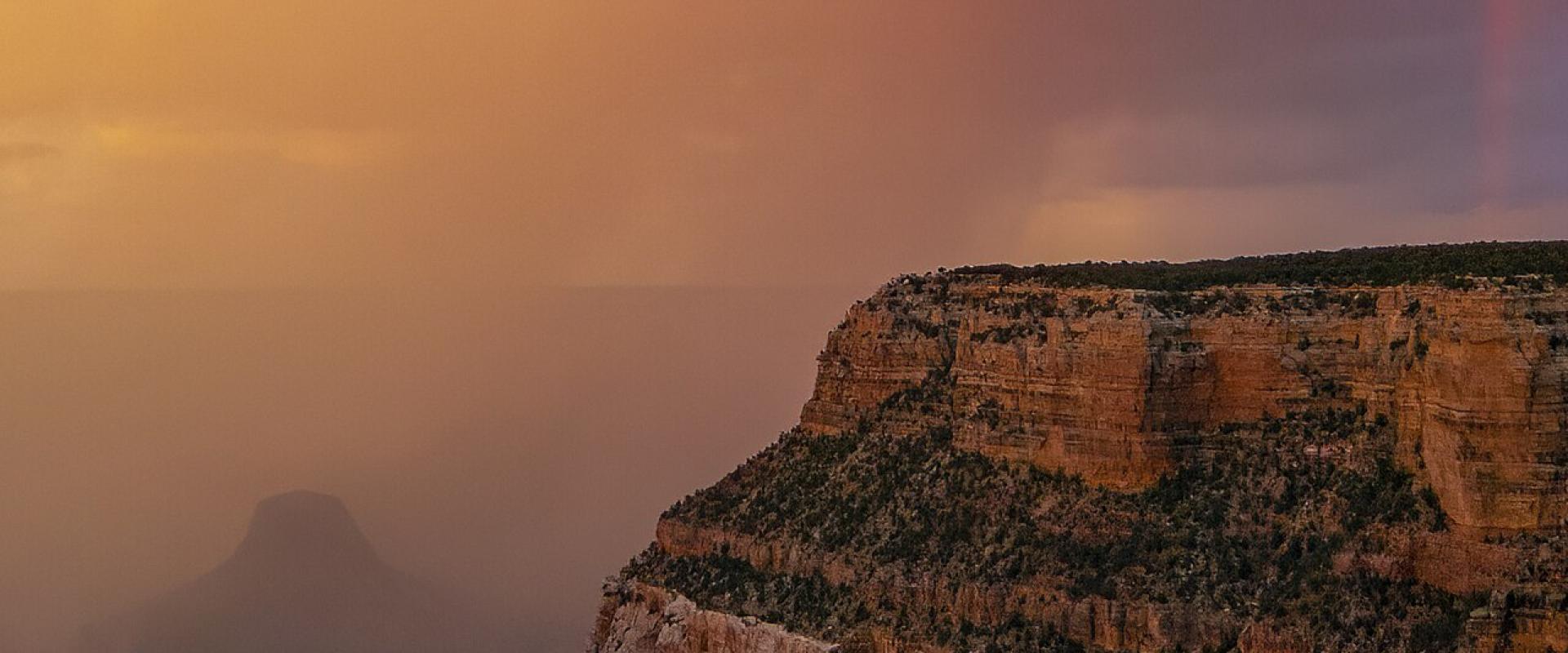
Arizona's weather is set by elevation more than by latitude. The low deserts around Phoenix and Tucson are hot and dry; the plateau country around Flagstaff and the Grand Canyon is cool and snowy in winter, with the South Rim at 7,000 feet and the North Rim at 8,000. In January Phoenix averages a high of 68 °F while the Grand Canyon averages 44 °F, and in summer the floor of the Grand Canyon averages around 30 °F hotter than the rim above it.
This guide covers the four things that shape a visit: summer heat, the summer monsoon, winter snow in the north, and the flash floods and dust storms that come with storms. Averages are NOAA's 1991-2020 normals unless stated.
Desert heat
| Phoenix | Tucson | |
|---|---|---|
| Hottest month (average high) | July, 106.5 °F | June, 101.2 °F |
| Warmest nights (average low) | July, 84.5 °F | July, 76.3 °F |
| Coolest month (average high) | December, 66.2 °F | December, 65.5 °F |
| Driest month | June, 0.02 in of rain | May, 0.20 in |
The City of Phoenix counted 121 days of 105 °F or more in 2024, 69 of them above 110 °F. Arizona's Department of Health Services describes the state as "one of the hottest places on earth from May to September", and counts about 4,298 emergency-room visits a year for heat-related illness.
On days when the National Weather Service issues an Extreme Heat Warning, Phoenix restricts its busiest summit trails from 8 a.m. to 5 p.m.: Echo Canyon and Cholla on Camelback Mountain, the Piestewa Peak summit trail, and the Holbert, Mormon and Hau'pal Loop trails plus the Pima Canyon access to the National Trail at South Mountain.
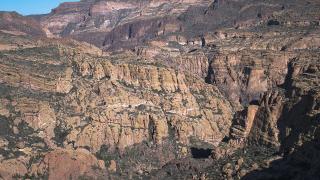
The inner Grand Canyon is a desert of its own. NPS says temperatures there rise about 5.5 °F for every 1,000 feet of descent, that summer highs at Phantom Ranch average around 30 °F more than on the rims, and that daytime inner-canyon temperatures can exceed 110 °F.
The monsoon (June 15 to September 30)
The National Weather Service defines the Southwest monsoon as running from June 15 to September 30. It is a seasonal shift in winds that carries moist air from the Gulf of California and the eastern Pacific into the desert; NWS points out that a single thunderstorm is not "a monsoon".
What to expect:
- Timing: in northern Arizona the moisture usually arrives in the first week of July. June before it is typically the hottest, driest stretch of the year up north and the peak of the fire season.
- Pattern: rain comes most days as afternoon and evening thunderstorms rather than all-day rain. Northern Arizona gets 40-50% of its annual precipitation in these months.
- Monthly totals: Tucson averages 2.21 inches in July and 1.98 inches in August; Flagstaff 2.61 and 3.04 inches.
- End of season: storms become less frequent in September, but NWS warns that late-season storms can be the most severe, when cooler Pacific troughs meet the remaining moisture.
The tribes that run Havasupai and the Navajo tribal parks both name July to September as the period of greatest flash flood risk. The Grand Canyon's hiking pages put the peak of thunderstorms in the canyon from mid-July to early September and warn that lightning has killed and injured visitors there.
Flash floods
NWS Flagstaff calls flash flooding "the biggest threat in northern Arizona during the Monsoon season". The 2026 season showed why. A storm on August 29 sent a flash flood down Bright Angel Canyon that destroyed infrastructure around Phantom Ranch and cut the water supply to Grand Canyon Village; the North Kaibab Trail, Phantom Ranch and the two river bridges were still closed with no reopening date in November. NPS warns that areas below the 2025 Dragon Bravo Fire burn scar on the North Rim can flood "in a matter of minutes".
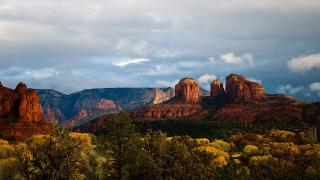
Floods are not only a summer hazard. The Navajo Nation warns that they can occur at any time of year, and heavy rain on November 1, 2026 flooded Oak Creek in Sedona, closing State Route 89A through Oak Creek Canyon and the creekside parks.
Rules from NWS and the parks:
- Never drive into water over a road. NWS says 12 inches of rushing water can carry away most cars and 2 feet can carry away SUVs and trucks; 6 inches of fast water can knock an adult over.
- Stay out of dry washes and narrow canyons when rain threatens anywhere upstream, and never camp in a wash (Organ Pipe Cactus National Monument).
- In a canyon, a roaring sound means move to higher ground immediately (Grand Canyon).
Arizona law adds a cost: a driver who goes around barricades onto a flooded road can be billed up to $2,000 for the rescue (A.R.S. 28-910).
Dust storms
Monsoon storms also throw up walls of dust that can cut visibility "to near zero in a matter of seconds", in the words of an Arizona Department of Transportation safety flyer published by NWS. ADOT's "Pull Aside, Stay Alive" steps are: avoid driving into dust; check traffic and slow down; leave the road completely, not stopping in travel or emergency lanes; turn off all lights, including flashers; take your foot off the brake and set the parking brake; stay buckled in; wait for the dust to pass.
Winter in the north
| Flagstaff | Grand Canyon (airport, near the South Rim) | |
|---|---|---|
| January average high / low | 43 / 18 °F | 44 / 16 °F |
| December snowfall | 18.5 in | — |
| January snowfall | 20.9 in | — |
| February snowfall | 19.3 in | — |
| March snowfall | 15.6 in | — |
Snow can fall in Flagstaff from October (1.5 inches on average) to May (1.1 inches). On the rim, NPS warns that winter weather "varies greatly and can change suddenly", trails and walkways may be icy, and snow can close park roads for short periods. The North Rim and State Route 67 are closed to all vehicles from December 1 to May 14 every year.
The deserts stay mild: Tucson's normal snowfall is close to zero (0.1 inch in February), and January highs in Phoenix and Tucson average 67 to 68 °F, with nights in the 40s.
Where to check conditions
- NWS forecasts: weather.gov (offices in Phoenix, Tucson and Flagstaff).
- Arizona roads: az511.gov or 1-888-411-7623.
- Grand Canyon roads: 928-638-7496.
- Grand Canyon trails and water: the park's Key Hiking Messages page, which covers the Bright Angel Trail and other corridor trails.
Details checked 6 November 2026.