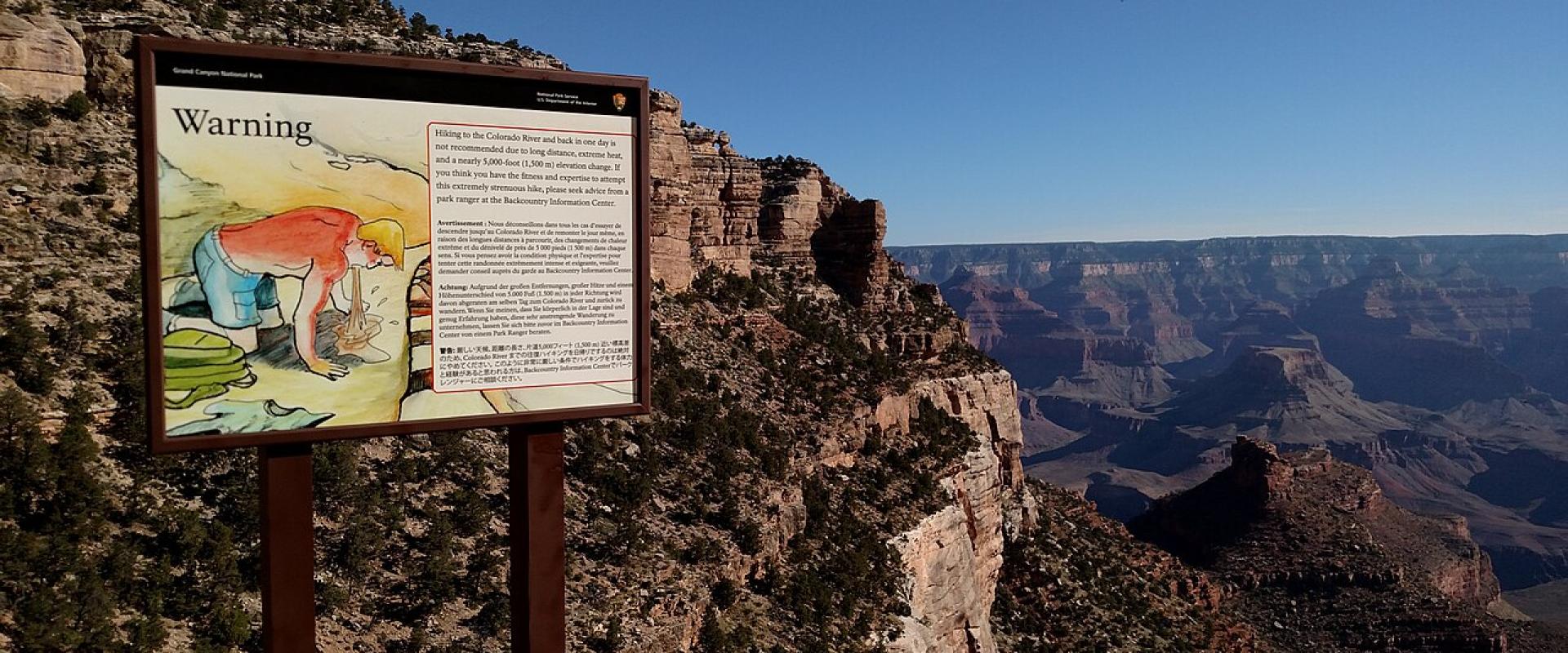
Most problems on an Arizona trip come from a short list: heat, dehydration, flash floods, falls at viewpoints and long distances between help. This guide gathers the official advice on each from the National Park Service, the National Weather Service, the Arizona Department of Health Services and the state's transport department. It is not medical advice; if you have a health condition, the Grand Canyon's own hiking pages recommend talking to your doctor before strenuous hikes in hot weather.
In an emergency, dial 911.
Extreme heat
Arizona's Department of Health Services calls the state "one of the hottest places on earth from May to September". It counts about 4,298 emergency-room visits a year for heat-related illness and more than 4,320 heat deaths from 2013 to 2024.
The rules that matter most:
- Avoid hiking between 10 a.m. and 4 p.m. in summer. This is the Grand Canyon's central heat rule; most of the people who need emergency help there for heat illness are hiking in those hours. Canyon de Chelly gives the same window. The Havasupai Tribe recommends avoiding 10 a.m. to 3 p.m. in excessive heat.
- Phoenix trail restrictions: on National Weather Service Extreme Heat Warning days, Phoenix closes Echo Canyon and Cholla on Camelback Mountain, the Piestewa Peak summit trail and several South Mountain trails from 8 a.m. to 5 p.m.
- Cars: NWS says it is never safe to leave a child, a disabled person or a pet in a parked car, even in winter.
- Who is most at risk: NWS lists young children, older adults, people with chronic conditions and pregnant women.
Heat exhaustion and heat stroke, as NPS describes them:
| Signs | What NPS says to do | |
|---|---|---|
| Heat exhaustion | Fatigue, nausea, vomiting, cool moist skin, headache, cramps | Stop hiking, rest in shade for 30-45 minutes, drink water with electrolytes, eat, get wet |
| Heat stroke | Flushed face, dry skin, rapid pulse, high body temperature, confusion or altered behaviour | A life-threatening emergency: cool the person immediately and call for help |
| Hyponatremia | Like heat exhaustion, plus confusion and frequent urination | Caused by drinking too much water without salt; stop drinking water, eat salty food, rest, get help if alertness falls |
NPS notes hikers can lose one or two quarts of water an hour. It also warns against forcing fluids: drink when thirsty and eat salty snacks.
Water: how much to carry
- Desert hikes: Organ Pipe Cactus National Monument recommends at least one gallon per person per day, plus extra gallons in the car, because a breakdown in summer can be deadly.
- Grand Canyon, winter 2026-27: after the August 2026 flood, the water stations at Mile-and-a-Half Resthouse, Three-Mile Resthouse and Havasupai Gardens on the Bright Angel Trail are off for the winter. The only potable water is in tanks at the Bright Angel and South Kaibab trailheads. Carry all your water and a way to treat stream water.
- South Rim: the park is under Stage 4 water restrictions and asks visitors to bring their own drinking water.
Flash floods and slot canyons
The National Weather Service calls flash flooding the biggest monsoon-season threat in northern Arizona, and says most flood deaths happen in vehicles. Its figures: 6 inches of fast water can knock over an adult and 12 inches can carry away most cars.
- Stay out of washes and narrow canyons when rain is threatening, and never camp in a wash (Organ Pipe).
- At Havasu Falls, the Havasupai Tribe says not to hike past the top of Mooney Falls or enter narrow parts of the canyon when it is raining or flooding; get to high ground and wait.
- Lower and Upper Antelope Canyon can only be visited on a guided tour, and the Navajo Nation warns that closures are possible in bad weather.
- The Navajo Nation warns that floods can occur in any month, not only July to September.
- In the Grand Canyon, flooding below the Dragon Bravo Fire burn scar "can happen in a matter of minutes", and a roaring sound means move to higher ground at once.
Never drive around a flood barricade: besides the danger, Arizona law can make you pay up to $2,000 for your rescue.
Altitude
The South Rim is at 7,000 feet and the North Rim at 8,000 feet, and the Betatakin trails at Navajo National Monument start at 7,300 feet. NPS says the altitude and dry air can cause sunburn, dehydration, nausea, shortness of breath and exhaustion, and advises sunscreen, steady drinking, and taking your time at viewpoints and on trails. Remember that every hike below a rim ends with the climb back up.
At the canyon edge
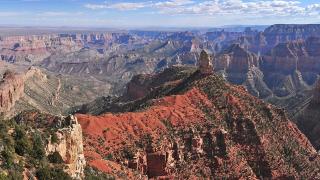
The Grand Canyon's rules, for Mather Point and every other overlook: stay on trails and walkways, keep at least six feet from the edge, never climb over railings, keep children within reach, and never throw anything over the edge.
Wildlife
- Rattlesnakes, scorpions and Gila monsters: Tonto National Monument says rattlesnakes and Gila monsters can deliver a life-threatening bite if they feel threatened, and scorpions an extremely painful sting. Its advice: stay at least 10 feet back and let them have the trail. Organ Pipe adds: don't put hands or feet where you can't see, check shoes and bedding, carry a flashlight at night, and wear boots and long trousers. It notes bites usually happen below the knee or elbow, and that venomous animals are most active when daytime temperatures stay above 90 °F.
- Cactus spines: Organ Pipe recommends a large-tooth comb or pliers to remove cholla.
- Bees: at Tonto, if a swarm is near, take shelter in a building or car.
- Larger animals at the Grand Canyon: keep at least 100 feet from elk, deer, bighorn sheep, condors and mountain lions, and 50 feet from smaller animals. Feeding wildlife is prohibited.
- Mountain lions: sightings are rare. If you meet one, Organ Pipe says don't run; make yourself large, shout, and fight back if attacked.
Lightning
Lightning has killed and injured visitors at the Grand Canyon, where storms build from July to September. NWS says no outdoor place is safe when thunderstorms are near; a solid building or a hard-topped car is.
Remote areas and medical help
- Grand Canyon inner canyon: NPS says self-rescue is required and rescue "is not guaranteed"; helicopter flights may be limited in extreme heat or storms. There is a clinic in Grand Canyon Village.
- Havasupai: there are no public medical facilities in Supai, and evacuation can take hours or days, at the patient's cost.
- Navajo Nation backcountry: rescue is not readily available, and most hiker deaths involve lone hikers. Never hike alone and tell someone your plans.
- Organ Pipe: the park sits on the Mexican border; if you meet people in distress or see suspicious activity, keep your distance and call 911.
Details checked 6 November 2026.