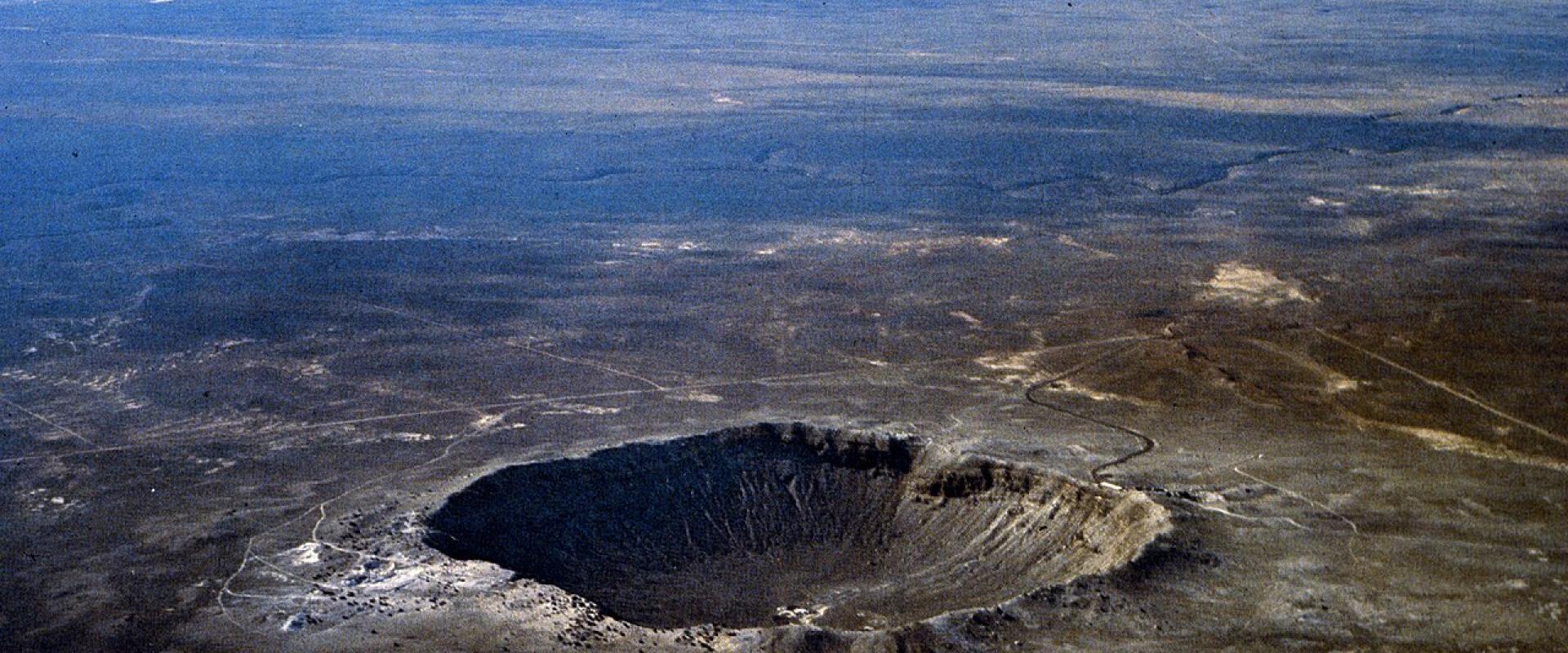
Meteor Crater
A privately run impact crater nearly a mile across and about 50,000 years old, with a museum and guided rim walks off I-40
- Admission
- 2026 online prices (meteorcrater.com): adults $29, juniors $25, seniors 60+ $27, children 5 and under free
- Discounts for veterans and active-duty military. The site gives the adult and junior age bands two ways (13-59 or 14-59; 6-12 or 6-13). Tickets never expire and are non-refundable. Privately operated
- Hours
- Open daily 8 a.m. to 5 p.m.; open until noon on Thanksgiving Day; closed Christmas Day (me...
- Where
- Winslow, Flagstaff & Painted Desert
- Directions
- Directions
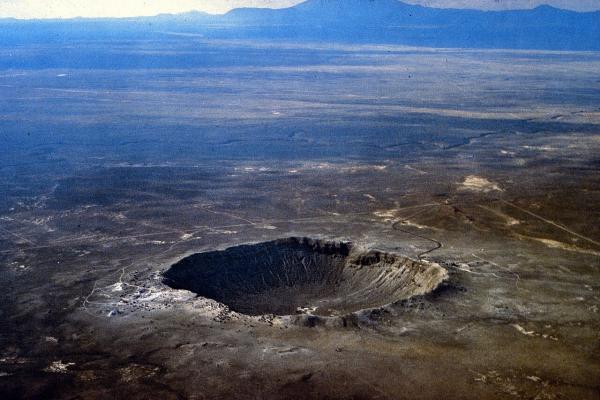
About 50,000 years ago, an iron-nickel meteorite roughly 150 to 160 feet across struck the plain between present-day Flagstaff and Winslow. It left a bowl about 3,900 feet across and some 560 feet deep, surrounded by a rim that rises about 148 feet above the plain. Mammoths and giant ground sloths lived in the grassland then. Because the climate here is dry, the crater has eroded little, and the Lunar and Planetary Institute, the American Museum of Natural History and others call it the best-preserved meteorite crater on Earth.
Working out what it was took decades. Settlers called it Coon Butte and took it for an extinct volcano, and in 1891 the chief geologist of the US Geological Survey, G.K. Gilbert, visited and concluded that it was volcanic. Daniel Moreau Barringer, a Philadelphia mining engineer, was convinced it was an impact crater and that a huge iron mass lay buried beneath it. He staked mining claims to the two square miles around the crater and, from 1903, spent 26 years searching. His last drill hole under the south rim reached 1,376 feet before the bit jammed, the cable broke and the money ran out in 1929. He was right about the impact but wrong about the iron: most of the meteorite had vaporized or melted. In 1960 Eugene Shoemaker of the USGS proved the crater was formed by an impact, and USGS scientists identified coesite and stishovite here, high-pressure forms of silica now used to recognize impact craters elsewhere. From 1964 to 1972 the USGS and NASA trained Apollo astronauts at the crater. It was designated a National Natural Landmark in 1967, although the operator gives the year as 1968.
The crater is still owned by the Barringer family and run as a private attraction by Meteor Crater Enterprises, a company formed in 1955 by the neighbouring Bar-T-Bar Ranch. Admission includes the Discovery Center and Space Museum, which has a 1,406-pound meteorite you can touch, a theater film about the impact, an Apollo test capsule, four lookout points, with fixed telescopes on the observation deck, and an indoor viewing area. Guided rim tours take 35 to 40 minutes, and there is elevator access. When checked in November 2026, the operator said floor tours were temporarily paused for trail restoration. Pets are not allowed inside the crater, but there is a shaded outdoor pet ramada for a fee of $17 per pet. The site is about 8 degrees warmer than Flagstaff, according to the operator.
Categories
More photos coming soon
Hours & Fees
- Open
- Open daily 8 a.m. to 5 p.m.; open until noon on Thanksgiving Day; closed Christmas Day (meteorcrater.com, November 2026).
- Admission
- 2026 online prices (meteorcrater.com): adults $29, juniors $25, seniors 60+ $27, children 5 and under free; discounts for veterans and active-duty military. The site gives the adult and junior age bands two ways (13-59 or 14-59; 6-12 or 6-13). Tickets never expire and are non-refundable. Privately operated.
Hours and prices change, especially out of season. Check with the venue before you go.
Nearby Attractions
Other places to visit in Winslow
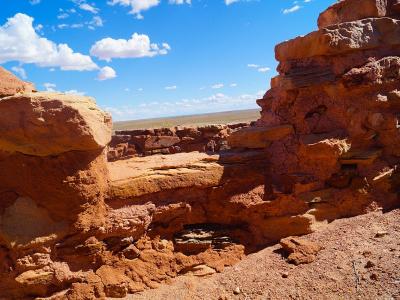
Homolovi State Park
Ancestral Hopi villages on the Little Colorado River, with a museum, a campground and an observatory
From $5 Historic Sites · State Parks
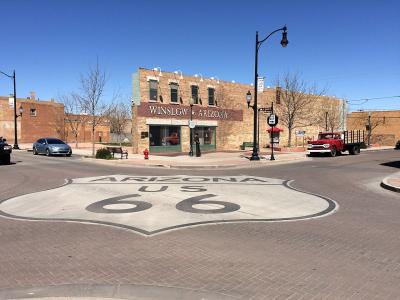
Standin' on the Corner Park
A downtown Winslow corner built around one line of 'Take It Easy', with a mural, a flatbed Ford and two statues
Historic Sites
Questions people ask
Quick Facts
2026 online prices (meteorcrater.com): adults $29, juniors $25, seniors 60+ $27, children 5 and under free
Discounts for veterans and active-duty military. The site gives the adult and junior age bands two ways (13-59 or 14-59; 6-12 or 6-13). Tickets never expire and are non-refundable. Privately operated.
Best Time to Visit
Spring and fall are the most comfortable for walking at Homolovi and Meteor Crater. Summer is hot, with monsoon storms from June 15 to September 30; the Standin' on the Corner festival is traditionally in the last week of September.