Supai
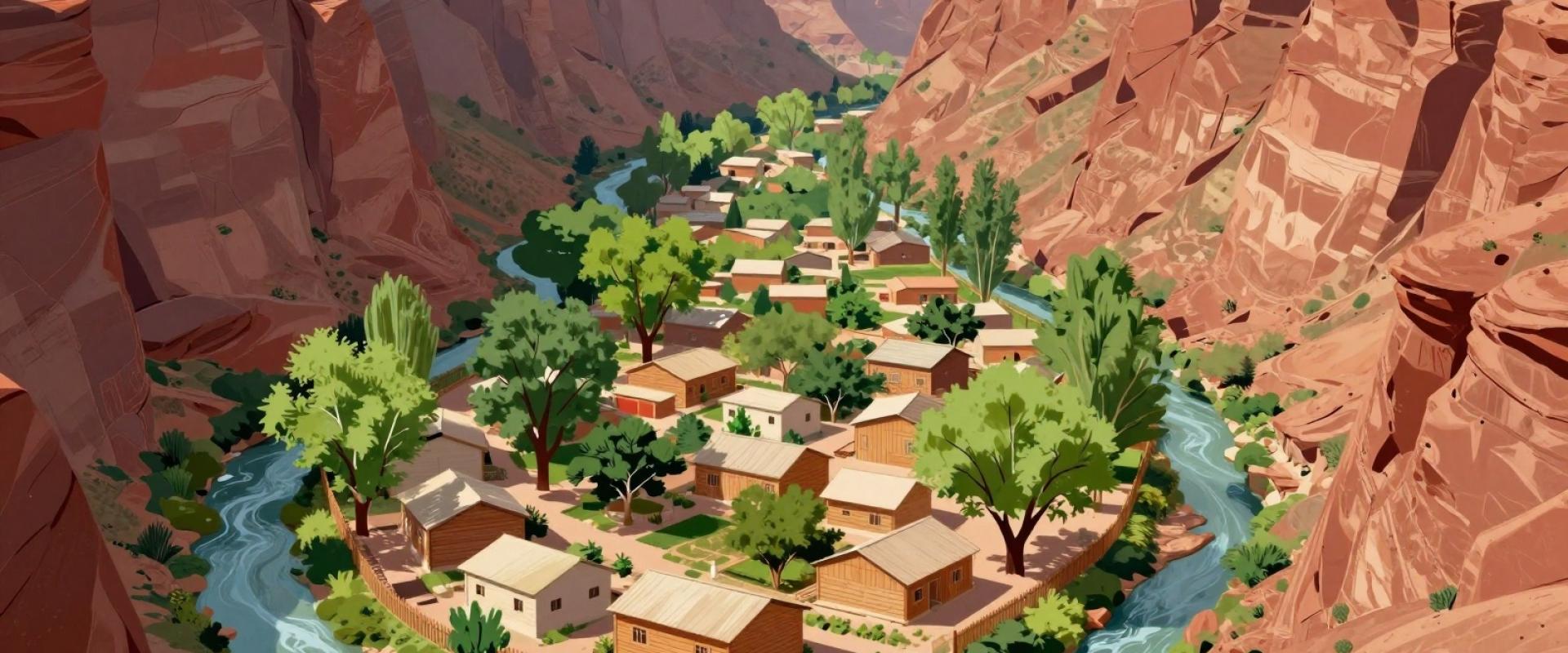
The Havasupai Tribe's village on the floor of Havasu Canyon, 8 miles by trail from the nearest road, open to visitors only with a tribal permit
The Village and the Tribe The Havasupai have lived in and around the Grand Canyon, in the tribe's words, since time immemorial. In the late 19th century, ranching and mining on the plateau pushed them down into Havasu Canyon, and the federal government established the reservation in the canyon in 1880. Havasupai families also lived seasonally at the place in the national park now called Havasupai Gardens, on the Bright Angel Trail, until the National Park Service forced the last of them out in 1928. That site is inside the park, not on the reservation, a difference that confused news coverage after the August 2026 flood.
About 500 of the tribe's roughly 770 members lived in the village, according to a 2023 Associated Press report. There is a small lodge, a store and a cafe, a school, a post office and a heliport, but no medical facilities, and the tribe warns that trained rescue teams are not available. Tourism is a large part of the tribe's income, and it was suspended entirely from March 2020 until February 2023 during the COVID-19 pandemic.
Permits and Prices All visits require a booking made before arrival through the tribe's own site, havasupaireservations.com. For 2026 a campground permit cost $455 per person for three nights, a lodge room $2,277 for three nights for up to four people, and a pack mule $400 round trip. Children aged 6 and under do not need a paid permit. Cancellations 90 or more days ahead get a 50 percent refund; after that, nothing. Resale or transfer is banned, and the tribe can close all or part of the reservation at any time. 2026 permits went on sale on February 1, 2026; the tribe had not posted 2027 dates when this page was checked in November 2026.
The Trip In The trip leader checks in at the tribe's permit check-in office at Mile Marker 115 on Route 66 near Peach Springs, on the day before or the day the permit starts. From there the turnoff for Indian Road 18 is about 5 miles west; the paved road runs about 60 miles through open range to Hualapai Hilltop, and the tribe says to allow at least an hour and a half. The nearest fuel is 70 to 90 miles from the trailhead, in Peach Springs and Seligman, so start with enough for at least 200 miles. Camping or sleeping in your car at Hilltop is not allowed.
The trail drops about 2,000 feet from Hilltop, at 5,200 feet, to the village, and the campground is another 2 miles on. Much of the trail has little shade. Helicopter seats cost $300 one way, can't be booked ahead and go to others first.
Rules to Know The reservation is dry: no alcohol or drugs. Pets and service animals are not allowed. You may photograph yourself and the scenery for personal use, but not tribal members, animals, homes, buildings, burial grounds or sacred sites; drones and commercial photography or filming are banned. Pack out every piece of trash and gear, or face a fine. Expect no cell signal or wifi.
Weather and Floods From May to September temperatures can pass 100°F. July to September is monsoon season, and Havasu Creek floods: an August 2008 flood forced an evacuation and closed the canyon to visitors until 2009. On August 31, 2026, the tribe said Havasupai was open and that the flood reports that week were about Grand Canyon National Park, not Supai.
Best time to visit
The tribe says the cooler months are best for hiking and the warmer months for the water; May to September is peak season, with heat over 100°F and monsoon flash-flood risk from July to September. Every visit needs a permit booked in advance, and 2027 permit dates had not been announced as of November 2026.
What to see in Supai
Our picks first.
Supai by interest
The same sights, grouped by what you came for.
Did you know?
Checked facts about Supai, each with its source.
-
History
The Havasupai regained 185,000 acres in 1975
The Grand Canyon National Park Enlargement Act, signed by President Ford in January 1975, gave the Havasupai 185,000 acres on the canyon rim and exclusive use of another 95,000 acres.
Source: Bureau of Indian Affairs -
History
Supai's 2008 flood created a new waterfall
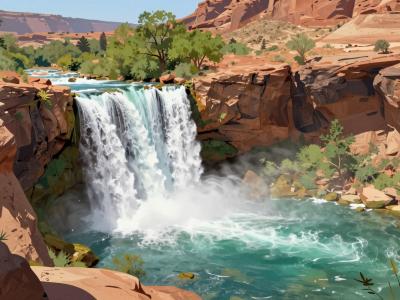
The flood of August 16-17, 2008, sent helicopters in to lift campers out of Havasu Canyon, with no deaths. It also created a new 30-foot waterfall, known variously as Rock Falls, Emerald Falls or Unnamed Falls.
Source: ABC News -
Trivia
Supai's mail still arrives by mule train
The Postal Service still delivers mail to Supai by mule, over an 8-mile trail. Each mule carries about 150 pounds of letters, packages and food.
Source: U.S. Postal Service
Planning a visit to Supai
Good to know
- Currency
- USD
- Language
- English
Quick Facts
Book your stay
Questions people ask
More places in Grand Canyon & Kaibab Plateau
Grand Canyon & Kaibab Plateau
Grand Canyon Village
The South Rim's historic village, open all year, with lodging and water still limited after the 2026 flood
Grand Canyon & Kaibab Plateau
Williams
A pine-country Route 66 town on I-40, an hour from the South Rim and the starting point of the Grand Canyon Railway
Grand Canyon & Kaibab Plateau
Jacob Lake
The crossroads on the Kaibab Plateau: the last fuel and food before the North Rim, which closes every winter