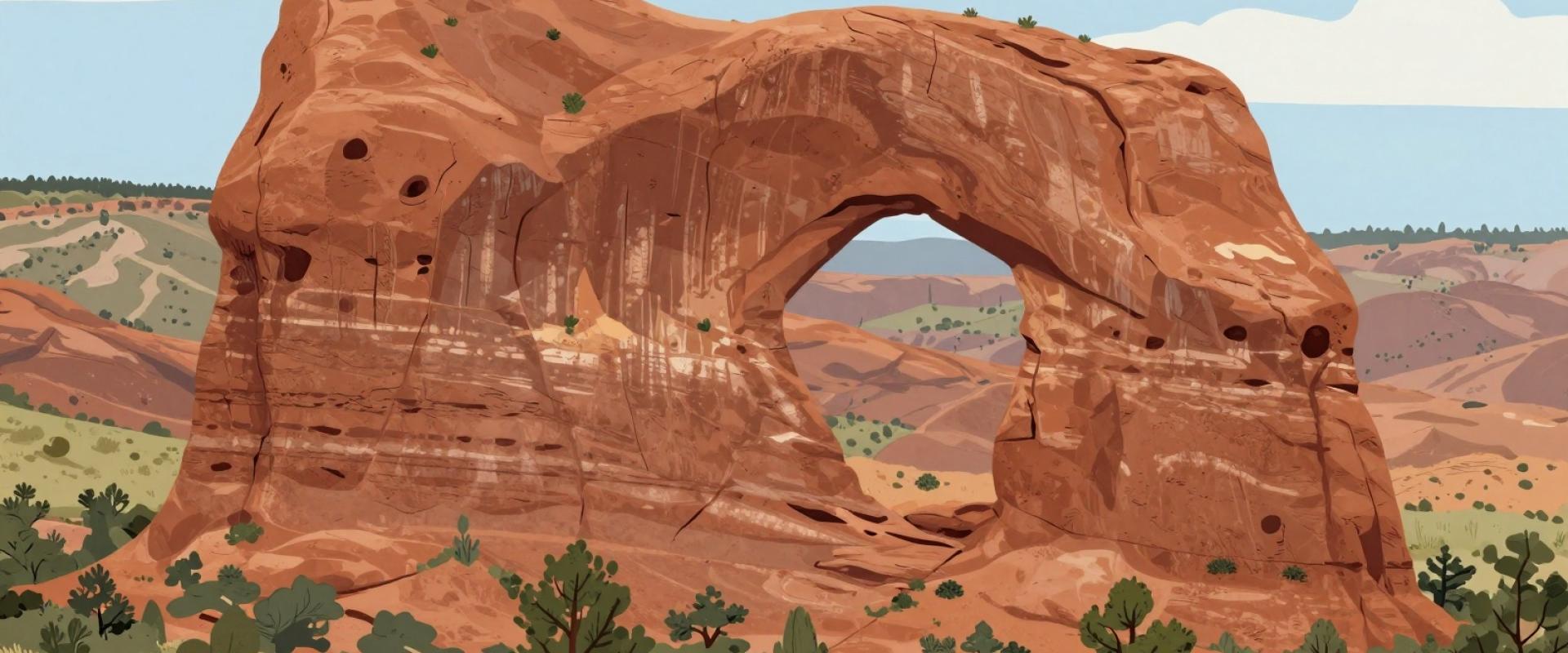
Window Rock
Capital of the Navajo Nation, named for a sandstone arch above the council chamber
History Until 1936 the area had few residents. The Navajo knew it by a ceremonial name, Niʼ Ałníiʼgi, 'Center of the World'. That year John Collier, the reforming Commissioner of Indian Affairs, chose the site for the Navajo Central Agency, the Bureau of Indian Affairs office for the Navajo. He wanted to use the ceremonial name, but Navajos objected, so the agency took the name of the local landmark instead. The rock with a hole through it became Window Rock in English. The arch matters in Navajo ceremony. It is one of the places where medicine men collect water in woven water jugs for the Water Way Ceremony, held to pray for rain.
What to See The Navajo Nation Council Chamber was built in 1934 and 1935 with New Deal money, on a site Collier picked in 1933. It is an octagonal building of red sandstone, designed to suggest a great hogan, with its main entrance facing east in the traditional way. It was declared a National Historic Landmark in 2004. The arch itself stands just north of the government buildings, in a small tribal park. At its base is a veterans memorial, set up in 1995, with a statue of a Navajo Code Talker of the Second World War. The Navajo Tourism Department lists the park as free and open daily from 8 a.m. to 5 p.m.
The Navajo Nation Museum shares its building with the Navajo Nation Library. In 2018 the National Archives lent it the 1868 treaty that let the Navajo return home from Fort Sumner, New Mexico. Next door, the Navajo Nation Zoo keeps more than 100 animals of about 50 species native to the region. It calls itself the only Native American owned-and-operated zoo in the country, and it is open Monday to Saturday, 10 a.m. to 4:30 p.m.
Hubbell Trading Post Most visitors combine Window Rock with Hubbell Trading Post, 31 miles west on State Route 264 at Ganado. John Lorenzo Hubbell bought the post in 1878, and it is still a working trading post, now run for the Park Service by a nonprofit. It is free to visit. Rangers offer free tours of the Hubbell family home when staff are available.
Events The greater Window Rock area, including Fort Defiance and St. Michaels, hosts the Navajo Nation Fair, a Fourth of July celebration and rodeo, and a Navajo Nation Treaty Day celebration. Dates change from year to year, so check before planning around them.
When to Go At 6,765 feet, Window Rock is cooler than most of Arizona. Pack for cold winter nights. Hubbell Trading Post's busiest month is May. In December the trading post holds its annual Luminaria Night. Remember that local clocks follow Navajo time, which is an hour ahead of Phoenix from March to November and matches it in winter.
Getting There Window Rock is on State Route 264 and Indian Route 12. Gallup, New Mexico, is about 26 miles away by road, and it has Amtrak and bus service. Flagstaff is about 188 miles west and Chinle about 67 miles northwest. The Navajo Transit System runs buses from Window Rock across the Navajo Nation.
Best time to visit
Late spring and early fall, when the high plateau is mild. Hubbell Trading Post's visits peak in May, and the Park Service holds a Luminaria Night at Hubbell each December.
What to see in Window Rock
Our picks first.
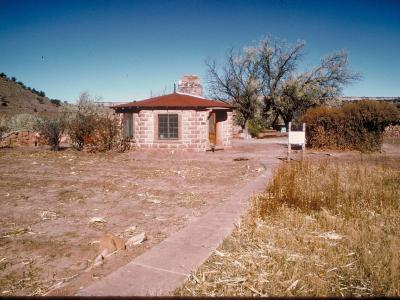
Hubbell Trading Post National Historic Site
The oldest operating trading post on the Navajo Nation, still buying rugs and selling groceries in Ganado
Free Historic Sites · Historic Buildings
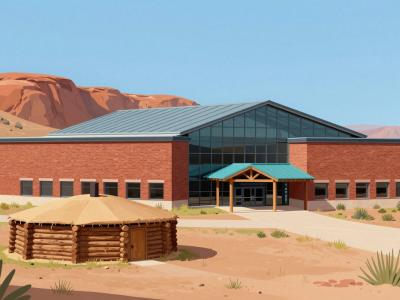
Navajo Nation Museum
The Navajo Nation's own museum and library, next to the zoo in Window Rock
Museums · Native American Heritage
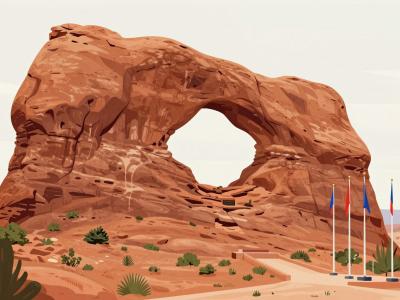
Window Rock Navajo Tribal Park and Veterans Memorial
The sandstone arch that names the Navajo capital, beside a memorial to Navajo veterans and Code Talkers
Free Historic Sites · Natural Wonders
Window Rock by interest
The same sights, grouped by what you came for.
Did you know?
Checked facts about Window Rock, each with its source.
-
History
Window Rock was picked as the Navajo capital in 1933
Commissioner of Indian Affairs John Collier chose Window Rock in 1933 as the new headquarters of the Navajo tribal government. The Navajo Nation Council Chamber was built there in 1934-1935 and is now a National Historic Landmark.
Source: National Park Service (National Historic Landmark nomination) -
Notable Person
A 1943 Navajo mural cycle lines the Council Chamber
Navajo painter Gerald Nailor finished the mural cycle "The History and Progress of the Navajo Nation" inside the Council Chamber in August 1943. He expanded it from three planned panels to eight, covering every wall.
Source: National Park Service (National Historic Landmark nomination) -
Trivia
Window Rock's zoo calls itself the only Native American zoo
The Navajo Nation Zoo and Botanical Park describes itself as the only Native American zoo in the U.S. First built in the early 1960s and in Tse Bonito Tribal Park since 1977, it keeps more than 100 animals, nearly all native to the Navajo Nation.
Source: Navajo Nation Zoo and Botanical Park
Planning a visit to Window Rock
Good to know
- Currency
- USD
- Language
- English
Quick Facts
Book your stay
Questions people ask
More places in Page & Monument Valley
Page & Monument Valley
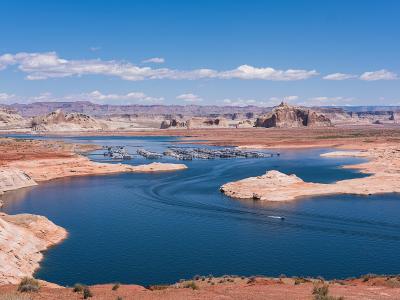
Page
Dam town on Manson Mesa, gateway to Lake Powell, Horseshoe Bend and Antelope Canyon
Page & Monument Valley
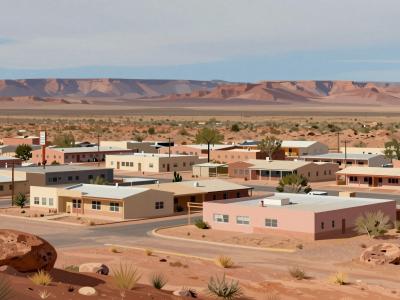
Kayenta
Navajo Nation township at the junction for Monument Valley and Navajo National Monument
Page & Monument Valley
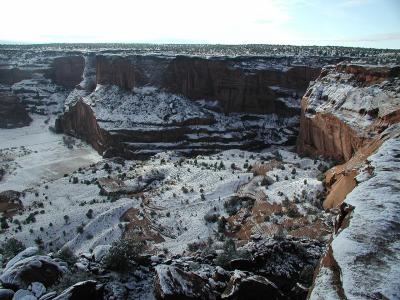
Chinle
Navajo town at the mouth of Canyon de Chelly, where families still farm the canyon floor
Page & Monument Valley
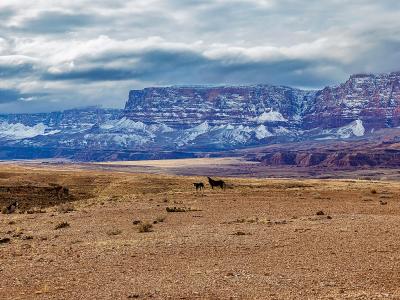
Marble Canyon
A roadside hamlet at Navajo Bridge, beside Lees Ferry and below the Vermilion Cliffs