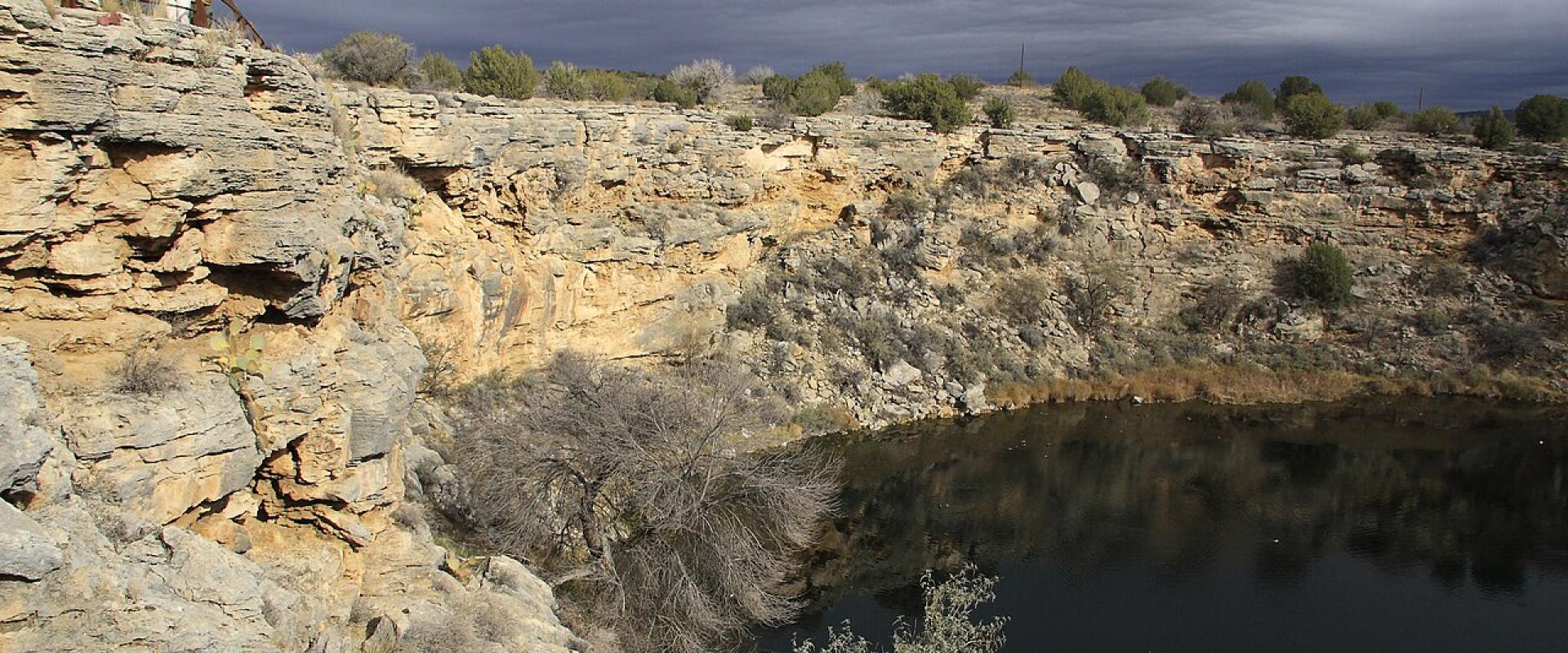
Montezuma Well
A limestone sinkhole holding 15 million gallons, with endemic species and cliff rooms at its rim
- Admission
- Free.
- Hours
- 9 a.m. to 4:45 p.m. daily. Closed Christmas Day and New Year's Day (NPS, November 2026).
- Where
- Camp Verde, Sedona & Verde Valley
- Directions
- Directions
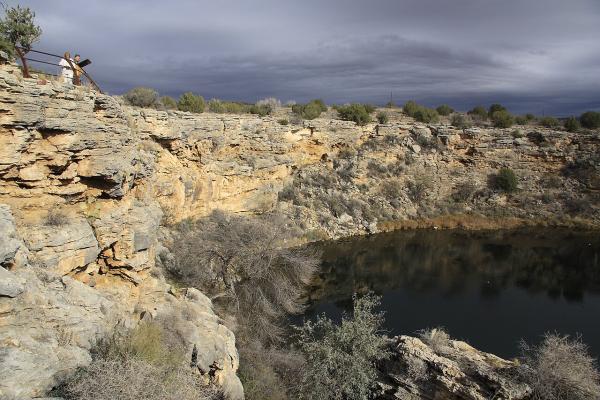
Few people expect what's waiting about 80 yards past the ranger station, at the top of the first hill. Montezuma Well is a collapsed limestone sinkhole containing over 15 million gallons of water, in a place that gets less than 13 inches of rain a year. That water fell as rain and snow on the Mogollon Rim more than 10,000 years ago, and it percolated slowly through the rock until a wall of volcanic basalt forced it back to the surface. It's a separate, free unit of Montezuma Castle National Monument, and it's easy to skip, which would be a mistake.
The water is extraordinary. High levels of dissolved carbon dioxide and arsenic mean that no fish can live in it, and without fish, life went its own way. The NPS counts five species found nowhere else on earth, along with a pondweed classified as its own species in 2019, which may be the deepest-living pondweed in the world. The food web runs on tiny amphipods, shrimp-like crustaceans that stay out in the open water by day beyond the reach of diving ducks. At night, endemic leeches rise from below to feed on them. A water scorpion and a springsnail, the latter smaller than a sesame seed, complete the cast. The Backs, who owned the land for more than 60 years, once tried to stock the Well for their resort guests. The fish died soon after.
People have long been drawn here too. A pithouse near the trail dates from around 1050 CE, and the farmers who lived here, possibly Hohokam, channeled the outflow into a canal that ran for miles to water corn, beans and squash. Sections of the old canal can still be seen. By the 1100s the Sinagua were building small dwellings into the cliffs around the rim, some of which you can see from the overlook. Wales and Jennie Arnold, the first Anglo-American settlers here, used the same canal in 1870. Many local tribes still consider the Well sacred, and the Hopi, Zuni and Yavapai all recount oral histories of their ancestors living here. Treat the site accordingly.
An overlook, the Swallet Trail and a 0.3-mile loop take in the dwellings and the water. Near the outlet, the shade can leave it up to 20 degrees cooler than on the rim. The water flows out through a narrow cave, closed to visitors because it shelters bats. Don't enter the water or climb on the walls. Rattlesnakes are common in the warm months. The NPS warns that GPS may direct you onto rough backcountry roads, which low-clearance cars and RVs should avoid, so follow the paved route from exit 293.
More photos coming soon
Hours & Fees
- Open
- 9 a.m. to 4:45 p.m. daily. Closed Christmas Day and New Year's Day (NPS, November 2026).
- Admission
- Free.
Hours and prices change, especially out of season. Check with the venue before you go.
Nearby Attractions
Other places to visit in Camp Verde
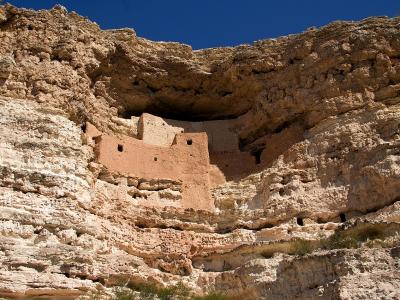
Montezuma Castle National Monument
A five-story, 20-room Sinagua cliff dwelling set high in a limestone wall
From $10 Historic Sites · National Parks
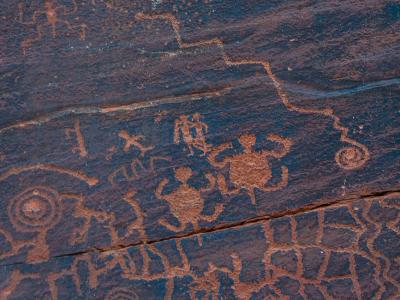
Crane Petroglyph Heritage Site
Over 1,000 Sinagua petroglyphs on Beaver Creek, known until 2024 as V Bar V
From $5 Historic Sites · Native American Heritage
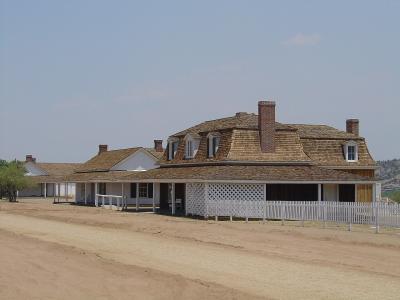
Fort Verde State Historic Park
The best-preserved Indian Wars fort in Arizona, with original 1870s buildings around a parade ground
From $5 Historic Sites · Museums
Questions people ask
Quick Facts
Best Time to Visit
March, April and October are the busiest and most comfortable months at Montezuma Castle. July and August are the quietest, and they're hot.