
Tubac
Arizona's first European settlement, now an arts village on the Santa Cruz River
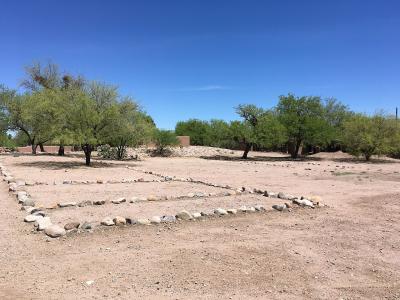
History First Six governments have held Tubac: New Spain, Mexico, the United States, New Mexico Territory, the Confederacy and Arizona Territory. The story is best told at Tubac Presidio State Historic Park, on Burruel Street, which became Arizona's first state park in 1958. It preserves excavated presidio foundations, the press that printed Arizona's first newspaper in 1859, an 1885 schoolhouse and an adobe row house lived in by one family for over a century.
From this site in 1775 Captain Juan Bautista de Anza led about 240 colonists, 63 of them from Tubac, and more than 1,000 head of livestock toward California, on the journey that founded San Francisco. The garrison moved to Tucson the following year. A mining boom in the 1850s, led by Charles Poston's company, gave the half-deserted village a revival.
A Walk on the Anza Trail The best outing here costs nothing but time. A section of the Juan Bautista de Anza National Historic Trail runs from the presidio along the Santa Cruz River to Tumacácori National Historical Park, about 4 miles each way. It crosses the river twice, so call the park first in the rainy season, because flooding can make the crossings impassable. It is an out-and-back route rather than a loop, and shorter loops are mapped at the park visitor center. Javelina, deer and coyote are sometimes seen along it. Plan on a shuttle or a return walk.
Art The village's tagline is "Where Art & History Meet". Tubac Center of the Arts, a member-supported nonprofit, has galleries, a permanent collection and free admission. Beyond that, independent galleries sell painting, sculpture, pottery, jewelry and photography, and you can browse them on foot in a morning. The Tubac Festival of the Arts fills the village each February, with designated parking areas and shuttles during the event.
Older Than the Presidio The first Spanish mention of Tubac dates from 1726, when a Jesuit priest baptized local Native people, according to the village's history page. The presidio plaza, with its church, barracks and captain's house, followed in 1763. Little of that stands above ground today, which is why the park's excavated foundations matter.
Nearby Tumacácori's mission church is just over 3 miles south by road, at Exit 29, and the two make a natural pairing. Madera Canyon, the birding hotspot in the Santa Ritas, is about 33 miles away by road via Continental Road, roughly an hour's drive. Both have their own pages here. The state park also lists the Titan Missile Museum, the only publicly accessible Titan II missile site in the country, Historic Hacienda de la Canoa, which offers ranch tours on Tuesdays and Saturdays, and Buenos Aires National Wildlife Refuge as area attractions. Confirm hours with each before you drive out.
Practical Notes The village is walkable once you arrive, and there are public restrooms around it, but you need a car to get here. Nogales and the Mexican border are a short way down Interstate 19. The local visitor association recommends fall, winter and spring for mild weather. Arizona does not use daylight saving time, so Tubac stays on Mountain Standard Time all year. The presidio park is closed on Mondays, which is worth knowing before you plan a long weekend.
Best time to visit
October to April, when the weather is mild; the Tubac Festival of the Arts takes place in February.
What to see in Tubac
Our picks first.
Madera Canyon
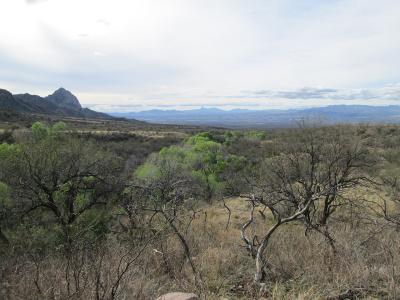
A sky-island birding canyon in the Santa Ritas, climbing from grassland to pine forest
From $8 Outdoor Recreation · Wildlife Viewing
Tubac Presidio State Historic Park
The ruins of Arizona's oldest Spanish presidio, and the state's first state park
From $3 Historic Sites · Museums
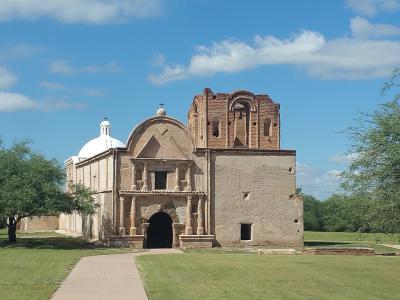
Tumacácori National Historical Park
An unfinished Franciscan mission church in the Santa Cruz Valley, its bell tower never completed
From $10 Historic Sites · National Parks
Tubac by interest
The same sights, grouped by what you came for.
Did you know?
Checked facts about Tubac, each with its source.
-
History
Tubac is Arizona's oldest Spanish presidio site
Spain established the Tubac Presidio in 1752, the oldest Spanish presidio site in Arizona. Its ruins are now Tubac Presidio State Historic Park, dedicated in 1958.
Source: National Park Service -
History
San Francisco's first colonists set out from Tubac
Juan Bautista de Anza's expedition to settle San Francisco left the Tubac Presidio on October 23, 1775. Of its 240 colonists, 63 were living in Tubac.
Source: National Park Service -
History
Arizona's first newspaper was printed in Tubac
The Weekly Arizonian, Arizona's first newspaper, was published in Tubac on March 3, 1859. The hand press used to print it is on display at the presidio park.
Source: Arizona State Parks
Planning a visit to Tubac
Good to know
- Currency
- USD
- Language
- English